




READERS GUIDE
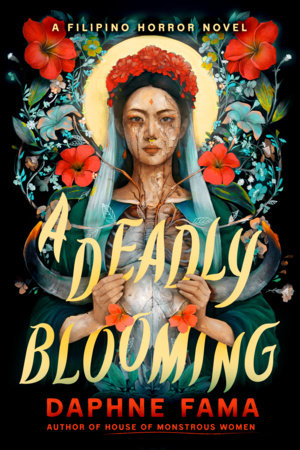
Reader’s GuideA Deadly Blooming by Daphne Fama
Discussion Questions:
1. Maria returns to Talalora believing her mother has rejected her. How did your understanding of Angela’s decision change over the course of the novel? Do you think Angela made the right choice by sending Maria away?
2. At the beginning of the story, Maria sees the Inabangan house as an escape from her life of poverty. What does the house come to represent to her by the end?
3. The inheritance is presented as an opportunity, but essential information is withheld from the women before they agree to compete in the trials. At what point, if any, do you think meaningful consent becomes impossible?
4. Which of the women competing for the inheritance did you empathize with most? Did your feelings toward them change as the trials progressed?
5. Maria spent much of her life protecting herself and becoming emotionally distant. Which relationships most successfully break through that armor? Why?
6. Maria and Ligaya are both trapped by obligations that began before either of them could choose them. In what ways are their situations similar, and in what ways are they different?
7. The relationship between Lalahon and Isabel echoes through the relationships of their descendants. Do you see Maria and Ligaya as repeating their ancestors’ story, repairing it, or creating something entirely new?
8. Lalahon’s love for Isabel survives for decades, but grief transforms that love into something destructive. Why do you think this
transformation happened?
9. The Diwata is worshipped as a provider and feared as a monster. Did your perception of the Diwata change as you read?
10. Talalora’s prosperity depends upon concealed violence against generations of women. How does the town justify that violence to itself? Do you see this trend echoed in parts of the world today?
11. The role of the babaylan is described as sacred but burdensome. How does the novel explore the difference between inheriting a cultural tradition and being consumed by it?


