



READERS GUIDE
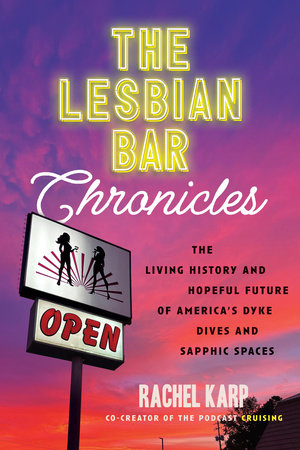
The Lesbian Bar Chronicles Discussion GuideThroughout the book, many people describe their first time in a lesbian bar. Vickie Hester describes stepping into Babe’s and seeing other gay people for the first time. Kevie Smith details going to a gay bar in Tulsa and realizing there were other people like her. Do you have a “first time” moment like this? Maybe your first time in a queer space, your first time in a space where you were in the majority, or the first time you realized you weren’t alone?
Have you visited any of the bars in the book? If so, how did the representation of them compare to your own experiences?
If you could have dinner with one person featured in the book, who would it be and why?
Alcoholism and addiction show up throughout the book, and are particularly prominent in the LGBTQ+ community, in large part due to the history of bars being among the only safe spaces available to us. Some individuals, like Sarah from YBR, and Jeanne from Maud’s, chose to step away from working in or frequenting the bars entirely because of alcoholism. Some, like Pearl Bar owner Julie Mabry and Boycott Bar owner Audrey Corley, see addiction support and/or harm reduction as central parts of their jobs. Do you think that bars like these – run intentionally and with an emphasis on harm reduction – help or hurt the community when it comes to alcoholism and addiction? Why?
The tension between respectability politics and radicalism as contrasting strategies in the fight for LGBTQ+ rights is a big theme in the book. While people like Charlene Schneider succeed in protecting their communities through playing nice with local police and advocating for policy change, others like Nancy Valverde, Pat McCombs, and ACT UP members fight for change through acts of protest. What approach do you think is most effective? How do race, sexuality, and gender presentation influence access to these different approaches?
In many cities, there are examples of lesbian bars opening in “less desirable” neighborhoods – due to the cheap rent and discrete locations – and then, as queerness becomes more socially acceptable to the mainstream, those neighborhoods become increasingly built up. What do you make of this pattern? Are queer spaces responsible for gentrifying neighborhoods, however inadvertently? Should they bear a responsibility to the communities around them that are affected by this gentrification? Vice versa, do you think these now highly sought after neighborhoods bear a responsibility to queer bars in danger of being pushed out by rising rents?
For the allies: did this book make you rethink your role as an ally or your relationship to the LGBTQ+ community in any way?
The book posits that everyone is welcome in a contemporary lesbian bar, so long as they are respectful of the space. Do you agree with this? Why or why not?
The book defines a lesbian as anyone who says they are a lesbian – “and not in the joking way that cis men sometimes do,” and a lesbian bar as “a) a bar that is b) owned or operated by lesbians, LGBTQ+ women, or nonbinary folks, and c) intentionally
welcomes lesbians, LGBTQ+ women, and nonbinary folks.” Do you agree with these definitions? If not, how would you define these terms differently?
Do you think we still need lesbian bars? Should there be more of them?