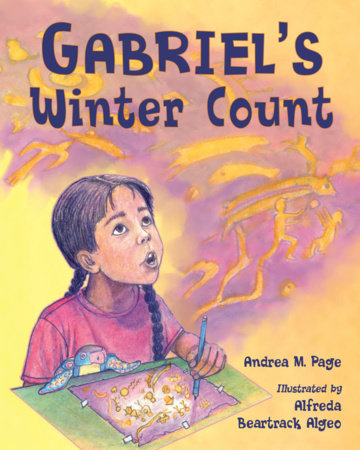
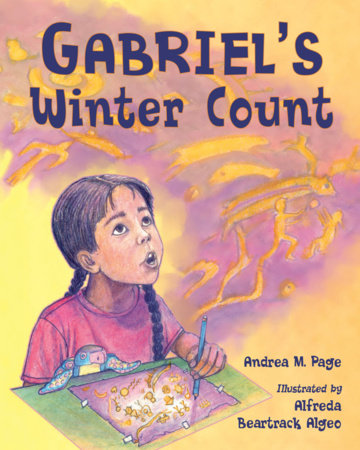
This gentle and beautiful book teaches Lakota values in a way that is specific to the story but grounded in themes universal to all children. When Gabriel’s parents leave home for service—Dad appears in military garb while Mom wears a wildland firefighter uniform—he worries that he didn’t bring a gift to mark their departure. His unci reassures her grandchild that he will find the right gift with time; in the morning, she shares with him the tradition of creating an illustrated calendar marking one’s family’s milestones called a waniyetu wowapi or winter count. While his parents are way, Gabriel draws his everyday life into his own winter count, including basketball games, birthday parties, and preparing wooden lodge poles. Pastel illustrations set realistic images of Gabriel and his family against backgrounds that feature patterns, symbols, and historical imagery drawn from Gabriel’s family’s historic winter count. Gabriel shares his winter count with his parents when they return; their reunion is sweet and satisfying. Rich back matter enhances the impact and understanding of this family story. It includes information about the People of the Seven Council Fires, winter counts, meteor showers (a historic shower from 1833 was noted in Gabriel’s family’s winter count), and Native Americans who serve. A glossary of Lakota words and letters from the author and illustrator are also present. VERDICT Readers will feel the love of family in this book about drawing on powerful cultural traditions to cope with family separation.
—School Library Journal
While his parents are away, a young Indigenous boy passes the time by learning about a Lakota tradition.
Gabriel’s father is serving in the military, and his mother is training in fire management, so Gabriel will be staying with his Unci (grandmother). He feels lonely without his parents. One night he observes Unci tracing over an unrolled bundle and talking about “1833—the year the stars fell.” The next day, Gabriel asks what she was doing, and she tells him about the waniyetu wowapi, or winter count, that her Lala (Grandfather) made. This illustrated calendar uses symbols to track important events that happened in their family. Inspired, Gabriel begins making one of his own, a collection of stories and history to share. Gabriel’s winter count is full of memories of playing baseball with cousins, celebrating a birthday, working on new lodge poles, and listening to elders tell stories. With this tender tale, Page (Standing Rock Sioux Tribe) celebrates the experience of preserving and telling stories and history both personal and communal. Beartrack-Algeo’s (Oceti Sakowin Nation) illustrations are full of vibrant colors alongside the gentle warmth of pink and purple skies. The images from the winter count swirl beautifully from page to page, a visual representation of events and memories held in the minds of those who share and tell them.
A meaningful tribute to the power and importance of story.
—Kirkus Reviews