





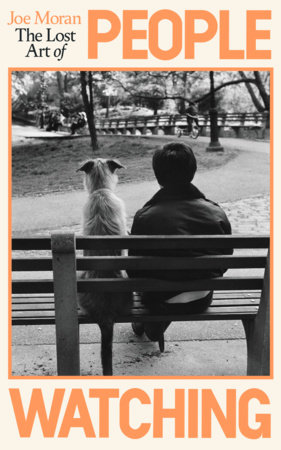


A meditative exploration of how people watching encourages us to be more curious about those around us, teaches us to decode our unique quirks and universal similarities, and enriches our digital-first lives
The fascinating practice of people watching is beginning to disappear. Whether we’re exchanging messages on our phones or rushing through negotiating the practicalities of daily life, we are often too busy with our devices to notice those around us. But what do we miss when they all go unseen?
Widely acclaimed observer of daily life Professor Joe Moran has spent many hours watching people—and he’s learned that we can’t fully understand others unless we really look at them properly. In The Lost Art of People Watching, he shows us how this uniquely human pastime can teach us to pay attention to the things we normally overlook, like the “baton signals” we use when we want to emphasize our speech, or the outdated gestures we use to signal paying the bill and asking the time—and thus learn new things about ourselves.
Along the way, he introduces famous people-watching sociologists, anthropologists, artists, and writers, from Erving Goffman and Desmond Morris to Alice Neel and Virginia Woolf. Through Moran’s own “field research”, in train stations and art galleries, parks and offices, at house parties and restaurants, he reveals the hidden strangeness of human behavior and the unlikely things that unite us.
The fascinating practice of people watching is beginning to disappear. Whether we’re exchanging messages on our phones or rushing through negotiating the practicalities of daily life, we are often too busy with our devices to notice those around us. But what do we miss when they all go unseen?
Widely acclaimed observer of daily life Professor Joe Moran has spent many hours watching people—and he’s learned that we can’t fully understand others unless we really look at them properly. In The Lost Art of People Watching, he shows us how this uniquely human pastime can teach us to pay attention to the things we normally overlook, like the “baton signals” we use when we want to emphasize our speech, or the outdated gestures we use to signal paying the bill and asking the time—and thus learn new things about ourselves.
Along the way, he introduces famous people-watching sociologists, anthropologists, artists, and writers, from Erving Goffman and Desmond Morris to Alice Neel and Virginia Woolf. Through Moran’s own “field research”, in train stations and art galleries, parks and offices, at house parties and restaurants, he reveals the hidden strangeness of human behavior and the unlikely things that unite us.
Author
Joe Moran
Joe Moran is Professor of English and Cultural History at Liverpool John Moores University and is the author of seven books, including Queuing for Beginners: The Story of Daily Life from Breakfast to Bedtime, Armchair Nation: An Intimate History of Britain in Front of the TV, Shrinking Violets: The Secret Life of Shyness and First You Write a Sentence. He writes for, among others, the Guardian, the New Statesman, and the Times Literary Supplement.
Learn More about Joe Moran


