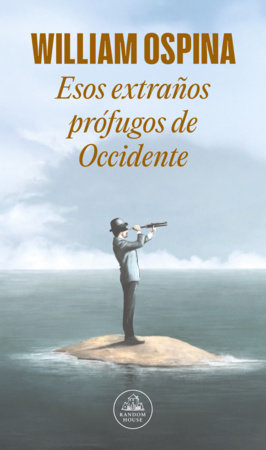
En esta prodigiosa mirada de William Ospina, el escape de una sociedad hostil y el peso de la herencia son el impulso común de esos extraños prófugos de Occidente.
«Nada me alegraría más que poder compartir mi entusiasmo por ellos y, si tanto puede pedirse, acaso iniciar a alguien en la amistad de esos extraños prófugos de Occidente». —William Ospina
Rimbaud abandonó las letras a los diecinueve años para dedicarse al contrabando en África, en un desesperado intento por olvidar su mundo y su pasado. Whitman entendió que una de las maneras de alcanzar el ideal democrático que su nación prometía era desistir de la exaltación de ídolos y dioses, herencia de la tradición clásica. Emily Dickinson creyó renunciar al universo pero se quedó con el lenguaje, que contiene todas las cosas. Lord Byron se convirtió en el mayor héroe romántico de la historia al dejarlo todo para luchar por la libertad de los pueblos sojuzgados. Faulkner develó con su literatura las dos mayores barbaries de la Norteamérica de comienzos de siglo XX: la intolerancia y el racismo. Holderlin vio no solo el extravío de Occidente en un humanismo arrogante, sino la abyecta tendencia al saqueo, la explotación y la destrucción del planeta.
ENGLISH DESCRIPTION
In this remarkable perspective by William Ospina, the escape from a hostile society and the weight of one’s heritage are the common driving forces behind these strange fugitives from the West.
“Nothing would make me happier than to share my enthusiasm for them and, if it is not asking too much, perhaps to introduce someone to the friendship of those strange fugitives from the West.” —William Ospina
Rimbaud abandoned literature at the age of nineteen to devote himself to smuggling in Africa, in a desperate attempt to forget his world and his past. Whitman understood that one of the ways to achieve the democratic ideal his nation promised was to renounce the exaltation of idols and gods, a legacy of classical tradition. Emily Dickinson believed she was renouncing the universe but retained language, which contains all things. Lord Byron became the greatest romantic hero in history by leaving everything behind to fight for the freedom of oppressed peoples. Through his literature, Faulkner exposed the two greatest barbarities of early 20th-century America: intolerance and racism. Hölderlin saw not only the West’s straying into an arrogant humanism, but also the abject tendency toward plunder, exploitation, and destruction of the planet.