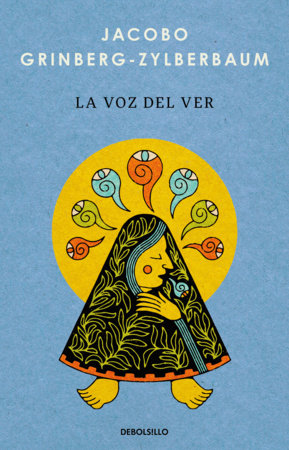
«LA HAZAÑA DEL VERDADERO CHAMÁN ES ACTIVAR LA CONCIENCIA DE SU PROPIO ESTADO Y, DESDE SU SILENCIO, COMPRENDER SU EXPERIENCIA Y SU CONCIENCIA, ASÍ COMO LA DE LOS OTROS, ES DECIR, ACTIVAR ‘LA VOZ DEL VER’.» —J. G. Z.
A partir de sus estudios sobre chamanismo mexicano y teoría sintérgica, Jacobo Grinberg-Zylberbaum propone que la realidad no es fija e independiente del observador, sino una experiencia en que la conciencia participa activamente. Desde esta premisa surge el concepto de “la voz del ver”: un estado de comprensión que aparece cuando el ser humano entra en contacto profundo con el Ser y accede a una conciencia expandida, desde la cual la experiencia no se percibe de manera fragmentada, sino como unidad.
Según el autor, los chamanes desarrollan esta capacidad mediante disciplina, silencio interior y entrenamiento perceptual, accediendo así a formas de conocimiento que transforman la relación entre mente, percepción y realidad. En esta obra, Grinberg-Zylberbaum traza una cartografía del conocimiento chamánico mexicano y la vincula con la neurofisiología y la percepción en un intento audaz por tender un puente entre ciencia y experiencia interior.
La voz del ver es la obra de un pensador que se atrevió a cuestionar los límites de la conciencia y a imaginar nuevas formas de comprender lo real.
ENGLISH DESCRIPTION
“THE FEAT OF THE TRUE SHAMAN IS TO ACTIVATE THE AWARENESS OF HIS OWN STATE AND, FROM HIS SILENCE, TO UNDERSTAND HIS EXPERIENCE AND HIS CONSCIOUSNESS, AS WELL AS THAT OF OTHERS—THAT IS, TO ACTIVATE ‘THE VOICE OF SEEING.’” —J. G. Z.
Based on his studies of Mexican shamanism and syntergic theory, Jacobo Grinberg-Zylberbaum proposes that reality is not fixed and independent from the observer, but rather an experience in which consciousness actively participates. From this premise arises the concept of “the voice of seeing,” a state of understanding that arises when a human being enters into deep contact with the Self and accesses an expanded consciousness from which experience is not perceived in a fragmented manner, but as a unity.
According to the author, shamans develop this capacity through discipline, inner silence, and perceptual training, thereby gaining access to forms of knowledge that transform the relationship between mind, perception, and reality. In this work, Grinberg-Zylberbaum maps out Mexican shamanic knowledge and links it to neurophysiology and perception in a bold attempt to bridge the gap between science and inner experience.
The Voice of Seeing is the work of a thinker who dared question the limits of consciousness and imagine new ways of understanding reality.