




Interviews
Tayari Jones on Her New Novel Kin: Inside Her Writing Process
The bestselling author discusses her new novel, intergenerational connection, and the meaning of kinship.
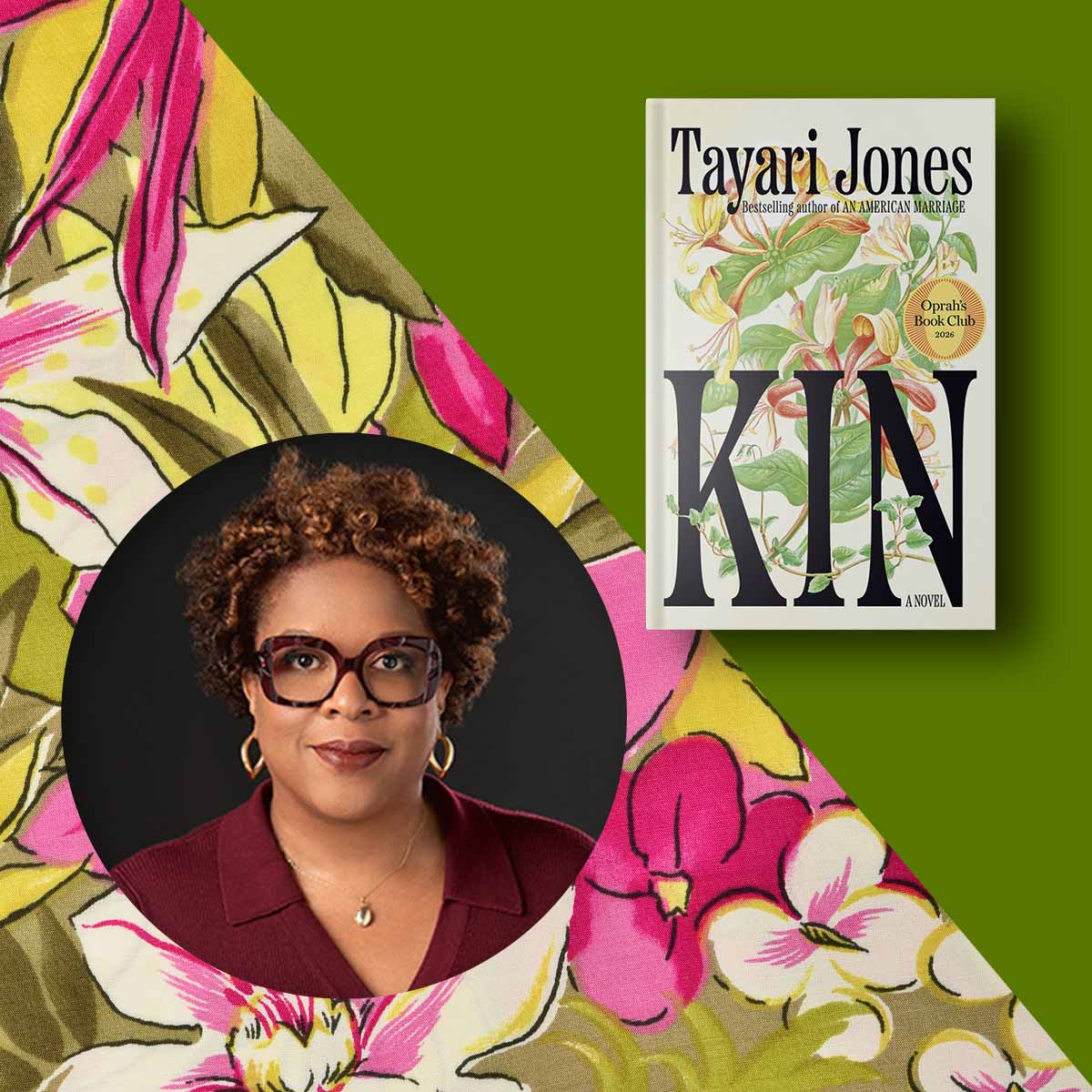
In her new novel Kin, critically acclaimed author Tayari Jones traces the life-altering bond between two girls growing up in the South in the 1950s. What begins with shared loss deepens into a friendship sustained by devotion, shaped by community, and marked by the ache and mythology of motherhood. We spoke with Tayari about writing Vernice and Annie, the truths that challenge stereotypes, and why she believes every story is ultimately about relationships.
Tia Guerrier: I want to jump right in with Vernice and Annie. Their lives are shaped by loss, and I felt the care you put into informing their characters. What inspired you to begin the novel with their bond, and how did you decide where to place the emotional weight in their early years?
Tayari Jones: I agree their lives are shaped by loss, but they are also shaped by love, right? Their love for each other. The fact that they both lost their mothers is the catalyst for their relationship. That’s where it starts. But everything in their lives is maintained by their love, because friendship is a relationship that we have to re-up on constantly.
With family, people say you can’t choose your family. That’s true. But friendship involves so much agency because you’re constantly saying, “I want to continue this.” Society lets you opt out, and you decide to opt in, and they decide to opt in and opt in deeper.
And every story is a story of a relationship. No matter what the story is, it’s about a relationship. The central relationship here is between Vernice and Annie, and I really enjoyed delving into their friendship.
I lost a close friend suddenly about five years ago, and then one of my childhood friends died suddenly during the pandemic. I felt like I was losing friends left and right. It made me think about closeness and connection. Part of the way I navigated my own sense of loss was to think about my own sense of love and put that on the pages.
TG: You’re reframing the book toward love, and that really struck me. Were you thinking at all about the modern language around “trauma bonds,” or the ways people sometimes connect through pain?
TJ: People can bond over shared trauma or tragedy. But there’s also an assumption in African American literature that Black literature is always the story of a trauma. I’ve talked to people who haven’t read the book; they see “two girls growing up in the South in the ’50s,” and they assume it’s a book about racial violence.
The truth necessarily challenges stereotypes. I never set out to challenge a stereotype. I set out to tell the truth. And the challenge to the stereotype is the byproduct of that truth.
The truth is, people connect in a healthy way because of love. Connecting over trauma isn’t healthy. But they help each other heal, or at least they try to.
TG: Motherhood and motherlessness are such powerful undercurrents in Kin. How did you approach writing Vernice and Annie’s wounds around motherhood, and the ways they try to heal each other?
TJ: Motherless children are an old standard for storytelling, even going back to fairy tales. It’s an old sadness. There’s that spiritual, “Sometimes I feel like a motherless child,” and people think of motherlessness literally, but also metaphorically, that feeling of being without comfort or without knowledge of your origins.
Even if you aren’t literally motherless, many of us know that feeling, particularly as Black people, of not having what we imagine as the unconditional embrace of motherhood.
But then there’s Annie. Annie is determined: “I’m going to find my mother.” And everyone who has a mother is trying to tell her there’s more to mothers than unconditional embraces. Annie understands “mother” as a symbolic condition, a symbolic entity.
What Annie and Vernice come to understand is that mothers are people. They’re human beings, complicated. And mother-daughter relationships are complicated. A mother isn’t just someone waiting to give you a hug.
TG: That made me think, too, about how, as Black Americans, our relationship with the country is similar to the feeling of being unmothered or unheld on a larger scale.
TJ: Yes. We feel like we’re orphans. We feel like we have no nation. This country is not our mother, right? It does not embrace us. And there’s a feeling that when you are a citizen, you should be embraced. This is your home, and you should be embraced, and we’re not. So we feel that on a macro level, although the characters feel it on a micro level.
TG: Friendship and sisterhood, and the ways women form connections across generations, are a central thread. How did you see those connections evolving across the novel?
TJ: I have to give you a little backstory. This was not the novel I was contracted to write. I was supposed to write a novel about gentrification in modern Atlanta. I tried, but it just wasn’t happening. My students would say, “The book was not booking.”
So I went old school. Pencil and paper. And I met Annie and Vernice, and I saw they were living in the ’50s. And I thought, no, I don’t contain a historical novel. That’s not what I do. But I had to follow it. It became clear to me that this is what I was being called to write.
I moved back to Atlanta because I wanted to get to know my parents differently, as adults. I wanted that “talk like two grown women” moment. And I realized my fantasy isn’t my mama’s fantasy. She’s like, “No. I’m your mother. You’re my child.”
So I was drawn to intergenerational relationships: Aunt Irene and Niecy, Niecy and the older women around her, Lulabelle and Annie. What is it to connect across generations? And because it’s set in the ’50s, it’s also my own attempt to connect with another generation.
TG: The title Kin suggests both familiarity and connection beyond blood. How do you think about chosen family versus inherited family, in the story and in your own life?
TJ: My feeling about chosen family has changed as I’ve gotten older. I understand how vital the relationships we choose are, and the agency we have in choosing them.
I’ve also put less value on biology. Not that I dismiss it, but I don’t love my daddy because he’s my biological father. I love my daddy because he’s my daddy. If I found out I was switched at the hospital, I don’t think I’d say they weren’t my parents.
Biology is only as important as we think it is, because what we think determines how we behave.
And in the book, look at Babydoll, Clyde, Bobo, and Annie. Don’t you think they’re a family? They have family dynamics, which means connection and complications. There’s drama. It’s not a family if it doesn’t have drama.
Someone once told me: annoyance is the price you pay for community.
TG: Looking back from writing Leaving Atlanta to An American Marriage and now to Kin, how has your approach to writing the nuance of relationships evolved?
TJ: As I get older, my compassion for all my characters grows. When I wrote An American Marriage, it was the first time I wrote characters in a way that sometimes put me on the wrong side of readers. Some readers wanted me to punish characters more, to make them suffer for their choices.
But I lean abolitionist. And if you’re going to be an abolitionist, it has to show up in your life and in your art. It’s not my job to make sure everybody gets theirs.
I also try to end every book with a sense of hope. I imagine someone reading who is living through what I’m writing about, and I don’t want them to walk away feeling worse than when they started. I needed a way forward for everyone.
And I’m not writing sequels because to have a sequel, your characters need book-level problems. I hope when I’m done with them, they just have regular problems.
TG: What do you hope readers take away from Kin and the lingering ties that persist in our lives?
TJ: I hope people take away a truer sense of the ’50s. It’s romanticized, and we forget it was populated by people with hopes, dreams, sexuality, conflict, all of it. We act like certain issues were invented in our lifetime. There were queer people in the ’50s. What was that like?
I also want a wake-up call. We’re living in a period where rights are being rolled back. While writing Kin, I realized how much women’s lives before contraception and reproductive justice were shaped by constant anxiety about pregnancy. You can’t control your life if you can’t control your fertility.
I was born in 1970. The birth control pill came into wide usage around 1968. I’ve never known a world where women were rolling the dice every time. And because our mamas didn’t talk to us, we don’t understand what is at stake.
I want people to enjoy the book. I think it’s funny. I love these characters. This book befriended me. But I can’t ignore the warning bells ringing throughout.
TG: Thank you again. This was such a wonderful conversation.
TJ: Thank you for reading. Reading is a gift. And I will say my Black women readers have always sustained me. There was a time when I was told my career was over, and a reader found me at my job and mailed me a knitted blanket to put on my lap when I write. I’ll never forget it.
Nikki Giovanni once told me, “Take care of your reader. Those Black women will take care of you for the rest of your life.”
This interview has been edited for length and clarity.
Add Kin to your shelf:
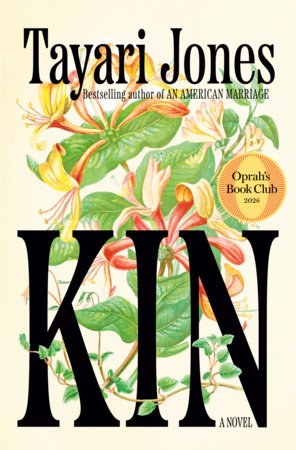


An Oprah’s Book Club Pick & New York Times Bestseller
A magnificent new novel from the bestselling, award-winning author of An American Marriage — Tayari Jones has written an unforgettable novel that sparkles with wit and intelligence and deep feeling about two lifelong friends whose worlds converge after many years apart in the face of a devastating tragedy.
Explore the must-read books recommended by Tayari Jones:
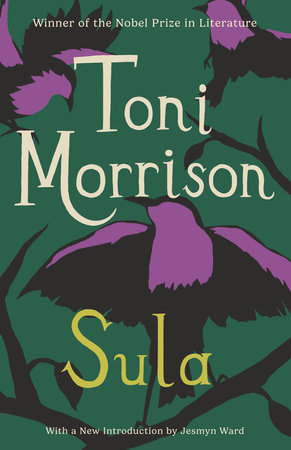
One of The Atlantic’s Great American Novels of the Past 100 Years
A modern masterpiece about love and kinship, about living in an America birthed from slavery. Nobel Prize laureate Toni Morrison gives life to characters who struggle with what society tells them to be, and the love they long for and crave as Black women.
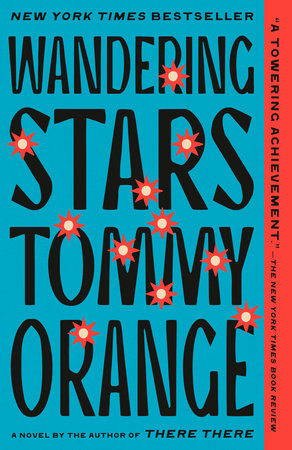
Extending his constellation of narratives into the past and future, Tommy Orange traces the legacies of the Sand Creek Massacre of 1864 and the Carlisle Indian Industrial School through three generations of a family in a story that is by turns shattering and wondrous.
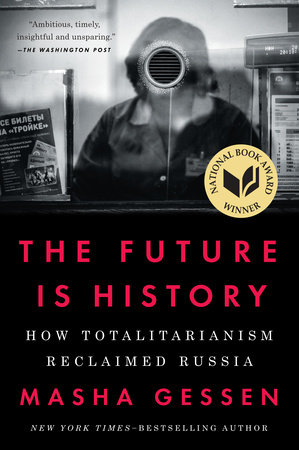
The essential journalist and bestselling biographer of Vladimir Putin reveals how, in the space of a generation, Russia surrendered to a more virulent and invincible new strain of autocracy. Powerful and urgent, The Future Is History is a cautionary tale for our time and for all time.
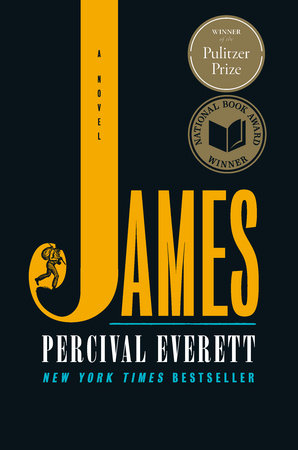
A brilliant, action-packed reimagining of Adventures of Huckleberry Finn, both harrowing and darkly humorous, told from the enslaved Jim’s point of view. Now in development as a feature film to be produced by Steven Spielberg.
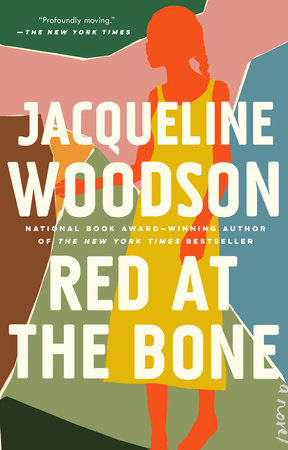
An unexpected teenage pregnancy pulls together two families from different social classes and explores their histories – reaching back to the Tulsa race massacre of 1921 – and exposes the private hopes, disappointments, and longings that can bind or divide us from each other, from the New York Times-bestselling and National Book Award-winning author of Another Brooklyn and Brown Girl Dreaming.


