Q: There have been several biographies of Bonhoeffer, including the first by his friend and student Eberhard Bethge and one more recently by the journalist Eric Metaxas. What made you feel the need to spend so many years to produce a new one? What sets this biography apart from the others?
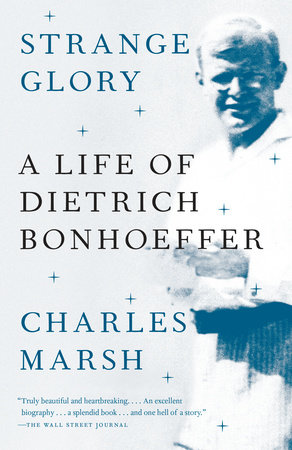
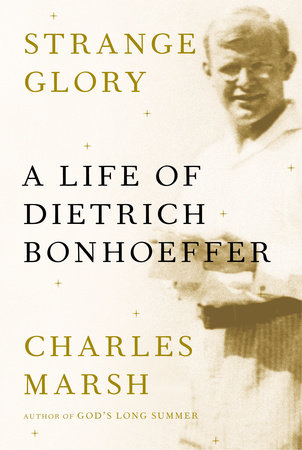
A: I’m pleased that Eric Metaxas has inspired such a spirited and intense conversation on Bonhoeffer’s life and legacy. Nevertheless, I wanted to tell the story afresh, as that of a deeply human figure and not merely just a saintly one, and to do so relying primarily on new archival discoveries, as well as interviews and primary documents. In fact, while I was working on my “Strange Glory”, I took all the Bonhoeffer biographies in my library and hid them in the basement. I did this so I could re-imagine the narrative arc, which was my main concern. The arc, the plot and the cast of characters in Metaxas’s biography all rely on Eberhard Bethge’s magisterial 1969 landmark biography. And this has been the case with all other Bonhoeffer biographies. I felt it was time to wrestle Bonhoeffer free of his best friend’s protective grasp, to re-examine all his relationships and his actions.
My colleague Victoria Barnett, who is the director of the Committee on Ethics, Religion, and the Holocaust at the U. S. Holocaust Museum in Washington and General Editor of the 16-volume Dietrich Bonhoeffer Works, said to me many years ago: “I’ve read every word Bonhoeffer has written. I’ve translated thousands pages of his works. But I still don’t really know who he is.” I’ve tried to get at this elusive mystery of character.
Q: In recent years political partisans have tried to claim Bonhoeffer for their own causes. What do you make of that?
A: The attempt to squeeze Bonhoeffer into our ideological box of choice does a grave disservice to his legacy. Bonhoeffer’s life and thought exhibit above all an uncommon generosity and openness to the world. His more popular works make biblical faith intelligible to believers and nonbelievers alike—The Cost of Discipleship, Life Together, books written amidst the chaos and fury of the Kirchenkampf—and do so without reducing complex ideas to clichés or pious talking points. No other Christian thinker crosses quite so many boundaries while yet remaining exuberantly—and one must always add—generously Christian. This is why his has story has attracted both liberals and evangelicals, Catholics and Protestants, Christians and Jews, church-goers and secularists alike. What all admire is Bonhoeffer’s indisputably authentic witness. But it’s human nature to imagine that someone we admire but see everything just as we do, and that has certainly happened with Bonhoeffer.
Q: You were given unprecedented access to Bonhoeffer’s papers to research this book. What were the most interesting revelations to come from these new documents? Did they help you understand Bonhoeffer in any unexpected ways?
A: I began working on “Strange Glory” in the spring semester of 2007, when I served as the Dietrich Bonhoeffer Visiting Professor at Humboldt University in Berlin. It was an exalted sounding post that came without a salary, housing, travel allowance or access to a printer. But I did have a cozy office on Burgstrasse just across the River Spree from the Berliner Dom. Soon enough I made my first trip to the Staatsbibliothek, the capacious city library designed by Hans Scharoun near the Postdamer Platz, and there, with the kindly assistance of the director of special collections, gained access to the Dietrich Bonhoeffer archives.
This collection, which had been recently obtained from the estate of Bonhoeffer’s biographer and dearest friend Eberhard Bethge, filled more than twenty-five cases and included lectures, letters, books, photographs, notebooks, and journals; and while many of the documents appeared in the sixteen volume Dietrich Bonhoeffer Works, the singularities of Bonhoeffer’s life, the evidence of which I held in my hands—his registration papers for a new Audi convertible, a bank slip from the joint account he shared with Eberhard, numerous files of magazine articles and pamphlets on the American Negro and race relations in the U.S, inventories of his wardrobe and library, landscape photographs he took in North Africa, a postcard from Waco, Texas, a brief correspondence with Mahatma Gandhi—all of this illuminated an intriguingly different image than the one I had carried with me since writing a doctoral dissertation on his philosophical thought 25 years earlier. I felt the gentle nudge into biography.
Q: In 1934, Bonhoeffer called himself a pacifist. But by 1940, he had joined the conspiracy against Hitler and conferring God’s blessings on tyrannicide. What changed his mind?
A: His brother in law, the conspirator Hans von Dohnanyi, used his position at the Ministry of Justice to obtain the Nazi confidential records and compile a “Chronicle of Shame,” a day-by-day listing of war crimes, military plans, and genocidal actions and policies, the full realization of which made clear to Bonhoeffer that his theological commitment to pacifism was outweighed by the greater responsibility to “kill the madman” Hitler. Still, he understood the gravity of taking a life, even that of a brutal tyrant. It was a “sin and sin boldly” proposition, risked in fear and trembling, and in hope of forgiveness.
Q: How did your interest in the history of the civil rights movement dovetail with your interest in a German theologian? Bonhoeffer in fact visited America in the 1930’s — can you describe what effect that had on him?
A: This was particularly transformative period for Bonhoeffer, this year as a visiting student at Union Theological Seminary in New York. When he arrived in Manhattan he was a straight-arrow academically ambitious twenty-four year old assistant professor with two doctoral dissertations under his belt. The trip was really a lark for him, something to pass his time. But when he left New York ten months later, he possessed a bold new understanding of his vocation as pastor and theologian. “It was the problem of concreteness that concerns me now,” he wrote. What happened?
In America he journeyed into new regions of experience: into the tenement buildings of New York, into the Harlem Renaissance, into the Deep South weeks after the Scottsboro Boys went to trial, and into a six month immersion in the black church. He engaged the National Women’s Trade Union League and the Workers Education Bureau of America; wrote notes on the labor movement, poverty, homelessness, crime, and the social mission of the churches. He met with officials from the American Civil Liberties Union, the nation’s premier defender of civil liberties which after its founding in 1920 had focused heavily on the rights of conscientious objectors and on the protection of resident aliens from deportation. And in the spring of 1931, he and a graduate student from Calais, France–who would later take part in the French Resistance –took a road trip together that carried them through the heart of Jim Crow South. In these unfamiliar regions, among a nearly forgotten generation of American radicals and reformers, he found the courage reexamine every aspect of his vocation as theologian and pastor and to embark upon what he would call “the turning from the phraseological to the real”.
Q: Yet he remained critical of Christianity in America? Could you say a word about this?
A: Suffice it to say, he was underwhelmed by what he experienced as the lack of intellectual seriousness among American Protestants. “Is this a theological school or a training center for politicians?” Bonhoeffer asked Reinhold Niebuhr after a class at Union Theological Seminary. But despite his numerous grumblings over American Christianity, it is undeniable that Bonhoeffer was moved and inspired by the social theology of Reinhold Niebuhr and company, by theologians who engaged the social order with civil courage and ultimate honesty—who insisted that the enterprise of theology required maximum attention to race, politics, literature, social justice, citizenship and the complex realities of the day. He would never again consider theology to be an activity confined to the academy, but part of the lived life in Christ.
Q: How did writing this book change you as a person of faith and scholar?
A: Eight years is a long time in anyone’s life, and frankly I still feel like I’m in the fog of final edits. But there’s no doubt that I have learned more fully what it means to borrow hope and to treasure the great gift that is (to cite a late poem by Bonhoeffer) the “quiet power of good”, the people who love you and care for you and help carry you along each day at a time.
Q: Do you have a favorite quote?
A: The famous last words attributed to Bonhoeffer in the hour of his death—“This is not the end for me; it is the beginning of life”—are those of a British intelligence officer writing five years after the war. And they are an eloquent farewell, and true to Bonhoeffer’s hopes. But the officer was not present when Bonhoeffer was summoned to the gallows in the concentration camp in Flossenburg. His last written words are more fitting for the pastor who had come to feel uneasy with pious language. “Please drop off some stationery with the commissar,” he said in a letter to his parents. That seems to me the perfect farewell.
Q: What’s the most surprising thing you learned about Bonhoeffer during your research?
A: That Bonhoeffer’s most provocative insights lie not in the answers he gave on matters of faith and doubt in the modern age, but in his courage to ask to ask the difficult questions; “Who is Christ for us today?”, “Are we still of any use?” “What is religionless Christianity?”, “Who am I?”
Q: “Religionless Christianity” has caused always stirred controversy. What did he mean by it?
A: Karl Barth, the theologian who influenced Bonhoeffer more than any other, had flummoxed his liberal Protestant contemporaries by claiming—as he put it bluntly—that “Jesus has nothing to do with religion.” Bonhoeffer’s late, fragmentary mediations on “religionless Christianity” trades, in some measure, on this rather forthright evangelical conviction; that religion is based on humanity’s search for God, but Christianity begins with God’s reaching out to humankind. So “religionless Christianity” means relationship with God without the entrapments of religion.
Nonetheless, it is undeniable that aspects of Bonhoeffer late meditations move in new and quite daring directions. “I am living, and can live, for days without the Bible,” he said. But when he opened his Bible again after an absence, he could hear and experience the “new and delightful . . . as never before.” “Authenticity, life, freedom, and mercy” had acquired a new significance for him. A worldliness heretofore unknown was unexpectedly refreshing his spiritual being, and with it he felt a growing aversion to all things “religious.” What a glorious discovery, the vast new spiritual energies he was feeling! It was an impulse to let things take their own course and try his best not to resist. It was his first intimation of spirituality outside the church.
Q: What else struck you?
A: On a more mundane level, I was surprised to discover the extent of his sartorial refinement—he kept a detailed account of his wardrobe and went to quite extraordinary lengths to ensure that his friend Eberhard, the son of a country parson, was similarly furnished with the best dress shirts, ties, suits, furs, and outfits for special occasions. This—and other earthy details—added color to the story; not even the great Protestant martyr could have too many pairs of shoes.







 QUICK VIEW