

Best Seller
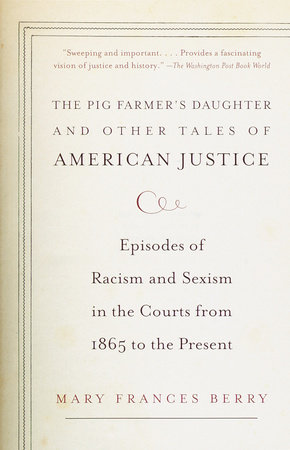
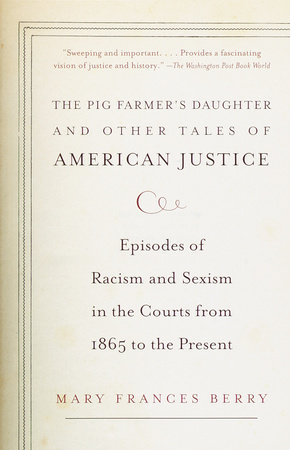
The Pig Farmer's Daughter and Other Tales of American Justice
Ebook
Published on Jul 20, 2011 | 304 Pages



Author
Mary Frances Berry
Mary Frances Berry was born in Nashville, Tennessee. She received a bachelor’s and master’s degree from Howard University, a doctorate in history from the University of Michigan, and a juris doctor degree from the University of Michigan Law School. Dr. Berry was the assistant secretary for education in the U.S. Department of Health, Education, and Welfare. She has received 30 honorary doctoral degrees and numerous awards for her public service and scholarly activities, including the NAACP’s Roy Wilkins Award and Image Award, the Rosa Parks Award of the Southern Christian Leadership Conference. She has also received the Hubert H. Humphrey Civil Rights Award from the Leadership Conference on Civil Rights. In addition to having been the chairperson of the U.S. Civil Rights Commission for 11 years, Dr. Berry is the Geraldine R. Segal Professor of American Social Thought at the University of Pennsylvania, where she teaches history and law.
Learn More about Mary Frances Berry QUICK VIEW
 QUICK VIEW
 QUICK VIEW
 QUICK VIEW
 QUICK VIEW
 QUICK VIEW
 QUICK VIEW
 QUICK VIEW
 QUICK VIEW
 QUICK VIEW