
Best Seller
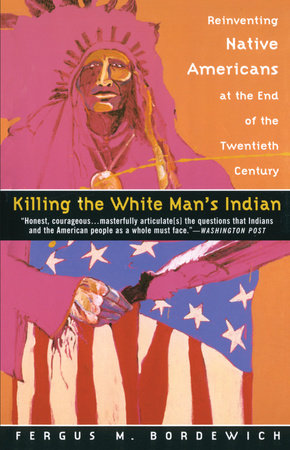
Killing the White Man's Indian
Paperback
$21.00
Published on Apr 14, 1997 | 400 Pages



Author
Fergus M. Bordewich
FERGUS M. BORDEWICH is the author of nine previous nonfiction books, including Klan War: Ulysses S. Grant and the Battle to Save Reconstruction; The First Congress: How James Madison, George Washington, and a Group of Extraordinary Men Invented the Government (winner of the 2019 D. B. Hardeman Prize in American History); America’s Great Debate: Henry Clay, Stephen A. Douglas, and the Compromise That Preserved the Union (named best history book of 2012 by the Los Angeles Times); and Bound for Canaan: The Underground Railroad and the War for the Soul of America. He lives in Washington, D.C., and Greensboro, North Carolina, with his wife, Jean Parvin Bordewich, the president of Guilford College and a playwright.
Learn More about Fergus M. Bordewich QUICK VIEW
 QUICK VIEW
 QUICK VIEW
 QUICK VIEW
 QUICK VIEW
 QUICK VIEW
 QUICK VIEW
 QUICK VIEW
 QUICK VIEW
 QUICK VIEW