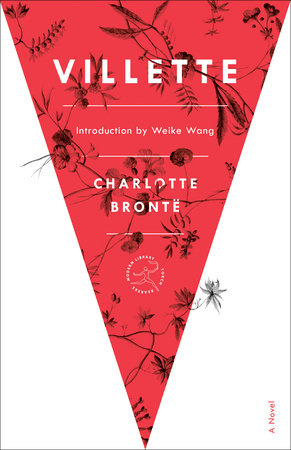
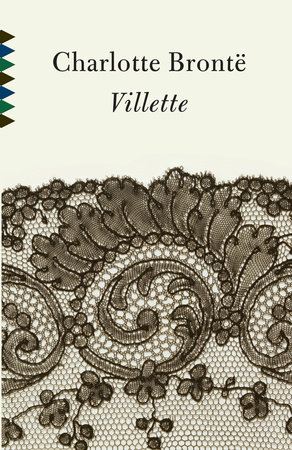
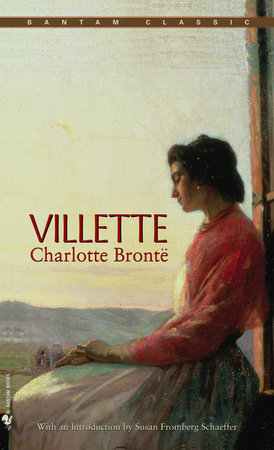
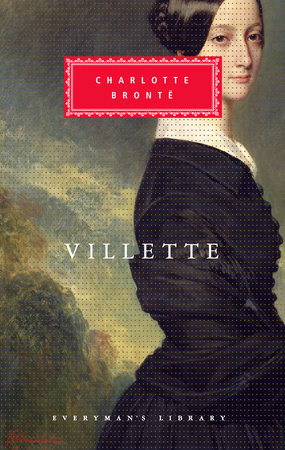
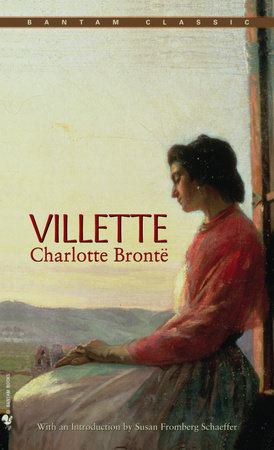
Best Seller
Ebook
Published on Jan 07, 1999 | 624 Pages
“Villette! Villette! Have you read it?” exclaimed George Eliot when Charlotte Brontë’s final novel appeared in 1853. “It is a still more wonderful book than Jane Eyre. There is something almost preternatural in its power.”
Arguably Brontë’s most refined and deeply felt work, Villette draws on her profound loneliness following the deaths of her three siblings. Lucy Snowe, the narrator of Villette, flees from an unhappy past in England to begin a new life as a teacher at a French boarding school in the great cosmopolitan capital of Villette. Soon Lucy’s struggle for independence is overshadowed by both her friendship with a wordly English doctor and her feelings for an autocratic schoolmaster. Brontë’s strikingly modern heroine must decide if there is any man in her society with whom she can live and still be free.
“Villette is an amazing book,” observed novelist Susan Fromberg Schaeffer. “Written before psychoanalysis came into being, Villette is nevertheless a psychoanalytic work—a psychosexual study of its heroine, Lucy Snowe. Written before the philosophy of existentialism was formulated, the novel’s view of the world can only be described as existential. . . . Today it is read and discussed more intensely than Charlotte Brontë’s other novels, and many critics now beleive it to be a true masterpiece, a work of genius that more than fulfilled the promise of Jane Eyre.” Indeed, Virginia Woolf judged Villette to be Brontë’s “finest novel.”
Arguably Brontë’s most refined and deeply felt work, Villette draws on her profound loneliness following the deaths of her three siblings. Lucy Snowe, the narrator of Villette, flees from an unhappy past in England to begin a new life as a teacher at a French boarding school in the great cosmopolitan capital of Villette. Soon Lucy’s struggle for independence is overshadowed by both her friendship with a wordly English doctor and her feelings for an autocratic schoolmaster. Brontë’s strikingly modern heroine must decide if there is any man in her society with whom she can live and still be free.
“Villette is an amazing book,” observed novelist Susan Fromberg Schaeffer. “Written before psychoanalysis came into being, Villette is nevertheless a psychoanalytic work—a psychosexual study of its heroine, Lucy Snowe. Written before the philosophy of existentialism was formulated, the novel’s view of the world can only be described as existential. . . . Today it is read and discussed more intensely than Charlotte Brontë’s other novels, and many critics now beleive it to be a true masterpiece, a work of genius that more than fulfilled the promise of Jane Eyre.” Indeed, Virginia Woolf judged Villette to be Brontë’s “finest novel.”
Author
Charlotte Bronte
Charlotte Brontë lived from 1816 to 1855. Jane Eyre appeared in 1847 and was followed by Shirley (1848) and Vilette (1853). In 1854, Charlotte Brontë married her father’s curate, Arthur Bell Nicholls. She died during her pregnancy on March 31, 1855, in Haworth, Yorkshire. The Professor was posthumously published in 1857.
Learn More about Charlotte BronteYou May Also Like
Mansfield Park
Paperback
$18.00
Persuasion
Paperback
$7.00
Sense and Sensibility
Paperback
$11.00
The Professor
Ebook
$3.99
The Painted Veil
Paperback
$15.00
My Antonia
Paperback
$5.95
My Ántonia
Paperback
$5.95
The Lion in Winter
Paperback
$21.00
The Magus
Paperback
$8.99
×