

-
Published on Apr 22, 2009 | 256 Pages
Best Seller
Ebook
Published on Apr 22, 2009 | 256 Pages

Part of the Jewish Encounter series
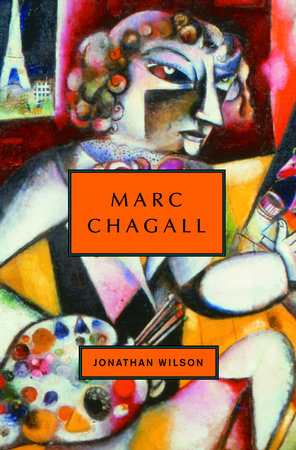
Novelist and critic Jonathan Wilson clears away the sentimental mists surrounding an artist whose career spanned two world wars, the Russian Revolution, the Holocaust, and the birth of the State of Israel. Marc Chagall’s work addresses these transforming events, but his ambivalence about his role as a Jewish artist adds an intriguing wrinkle to common assumptions about his life. Drawn to sacred subject matter, Chagall remains defiantly secular in outlook; determined to “narrate” the miraculous and tragic events of the Jewish past, he frequently chooses Jesus as a symbol of martyrdom and sacrifice.
Wilson brilliantly demonstrates how Marc Chagall’s life constitutes a grand canvas on which much of twentieth-century Jewish history is vividly portrayed. Chagall left Belorussia for Paris in 1910, at the dawn of modernism, looking back dreamily on the world he abandoned. After his marriage to Bella Rosenfeld in 1915, he moved to Petrograd, but eventually returned to Paris after a stint as a Soviet commissar for art. Fleeing Paris steps ahead of the Nazis, Chagall arrived in New York in 1941. Drawn to Israel, but not enough to live there, Chagall grappled endlessly with both a nostalgic attachment to a vanished past and the magnetic pull of an uninhibited secular present.
Wilson’s portrait of Chagall is altogether more historical, more political, and edgier than conventional wisdom would have us believe–showing us how Chagall is the emblematic Jewish artist of the twentieth century.
Visit nextbook.org/chagall for a virtual museum of Chagall images.
Novelist and critic Jonathan Wilson clears away the sentimental mists surrounding an artist whose career spanned two world wars, the Russian Revolution, the Holocaust, and the birth of the State of Israel. Marc Chagall’s work addresses these transforming events, but his ambivalence about his role as a Jewish artist adds an intriguing wrinkle to common assumptions about his life. Drawn to sacred subject matter, Chagall remains defiantly secular in outlook; determined to “narrate” the miraculous and tragic events of the Jewish past, he frequently chooses Jesus as a symbol of martyrdom and sacrifice.
Wilson brilliantly demonstrates how Marc Chagall’s life constitutes a grand canvas on which much of twentieth-century Jewish history is vividly portrayed. Chagall left Belorussia for Paris in 1910, at the dawn of modernism, looking back dreamily on the world he abandoned. After his marriage to Bella Rosenfeld in 1915, he moved to Petrograd, but eventually returned to Paris after a stint as a Soviet commissar for art. Fleeing Paris steps ahead of the Nazis, Chagall arrived in New York in 1941. Drawn to Israel, but not enough to live there, Chagall grappled endlessly with both a nostalgic attachment to a vanished past and the magnetic pull of an uninhibited secular present.
Wilson’s portrait of Chagall is altogether more historical, more political, and edgier than conventional wisdom would have us believe–showing us how Chagall is the emblematic Jewish artist of the twentieth century.
Visit nextbook.org/chagall for a virtual museum of Chagall images.
Author
Jonathan Wilson
JONATHAN WILSON is the author of eight previous books, including the novels The Hiding Room (a finalist for the Jewish Quarterly-Wingate Prize) and A Palestine Affair (a New York Times Notable Book and National Jewish Book Award finalist); two short story collections, Schoom and An Ambulance Is on the Way; and the soccer memoir Kick and Run. He lives in Newton, Massachusetts.
Learn More about Jonathan WilsonYou May Also Like
Theatre of Fish
Paperback
$19.00
Complete Poems
Paperback
$17.00
Sybille Bedford
Ebook
$12.99
Salmonella Men on Planet Porno
Ebook
$4.99
Lifelines
Paperback
$26.00
The Penguin Book of the Prose Poem
Paperback
$19.00
Animal Spirit
Paperback
$25.00
Eating the Sun
Hardcover
$25.00
Chagall
Ebook
$11.99
×