

Best Seller
Ebook
Published on Dec 20, 2011 | 224 Pages

In order to effectively draw clothing and drapery, an artist must recognize the basic shapes of clothing and how the principles of physics act upon those shapes.
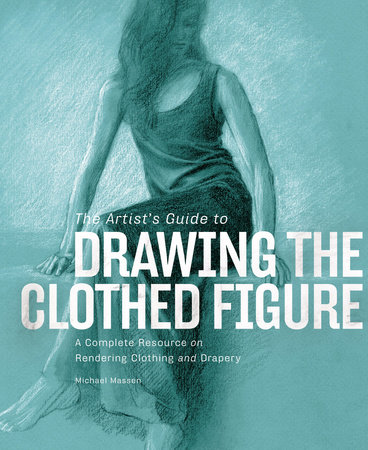
Beginning with the basic shapes of clothing and the anatomy of folds, and progressing to final rendering techniques of both sculpted and loose drapery on solid forms—including how motion affects wrinkles, folds, and waves, The Artist’s Guide to Drawing the Clothed Figure presents a novel and completely thorough approach to understanding the mechanics of drapery.
This comprehensive resource examines the mechanical principles behind the formation of folds: simple wave patterns, intersecting wave patterns, and tertiary effects upon these two, such as twisting and flowing forms. The book breaks down all clothing into three types: sculpted forms, loose drapery, and, most especially, tubes.
Once these mechanics are established, various techniques for rendering clothing are presented, including how factors such as the stiffness, thickness, or texture of a particular material can affect the appearance of an article of clothing. Throughout, the author examines examples from master draftspersons—old masters, cartoonists, illustrators, and fashion illustrators, including Leonardo da Vinci, Ingres, Degas, Joseph Christian, Leyendecker, Charles Dana Gibson, Raphael, and Will Eisner—to see how they interpreted this information.
Beginning with the basic shapes of clothing and the anatomy of folds, and progressing to final rendering techniques of both sculpted and loose drapery on solid forms—including how motion affects wrinkles, folds, and waves, The Artist’s Guide to Drawing the Clothed Figure presents a novel and completely thorough approach to understanding the mechanics of drapery.
This comprehensive resource examines the mechanical principles behind the formation of folds: simple wave patterns, intersecting wave patterns, and tertiary effects upon these two, such as twisting and flowing forms. The book breaks down all clothing into three types: sculpted forms, loose drapery, and, most especially, tubes.
Once these mechanics are established, various techniques for rendering clothing are presented, including how factors such as the stiffness, thickness, or texture of a particular material can affect the appearance of an article of clothing. Throughout, the author examines examples from master draftspersons—old masters, cartoonists, illustrators, and fashion illustrators, including Leonardo da Vinci, Ingres, Degas, Joseph Christian, Leyendecker, Charles Dana Gibson, Raphael, and Will Eisner—to see how they interpreted this information.
Author
Michael Massen
Michael Massen is a sculptor, painter and draftsperson. He lives in New York City, where he made his living for years as an art director and graphic designer. Mr. Massen holds a BA from Wesleyan University and an MFA in painting from the New York Academy of Art. He is the author of The Artist's Guide to Drawing the Clothed Figure published by Watson-Guptill Publications in 2011. Mr. Massen teaches regular workshops in figure drawing at the Art Students League of New York in addition to other venues. Visit his website at michaelmassen.com.
Learn More about Michael MassenYou May Also Like
Start Sketching & Drawing Now
Ebook
$12.99
Discover Oil Painting
Ebook
$11.99
Classic Portrait Painting in Oils
Ebook
$9.99
Figure Drawing in Proportion
Ebook
$12.99
Extreme Perspective! For Artists
Ebook
$13.99
Face Off
Ebook
$8.99
Watercolor Basics
Paperback
$25.00
Drawing Secrets Revealed – Basics
Ebook
$11.99
Perspective for the Absolute Beginner
Ebook
$11.99
×