


Best Seller
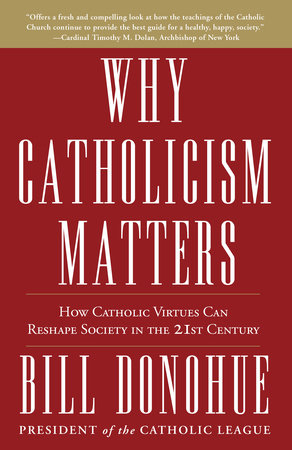
Why Catholicism Matters
By Bill Donohue
By Bill Donohue
Paperback
$19.00
Published on Jun 25, 2013 | 304 Pages



The most visible representative of the Catholic Church in the United States shows how the Church is far from being an ossified carry-over tradition from antiquity. Why Catholicism Matters celebrates the significant contribution the Church makes in many aspects of today’s world and applies its wisdom to issues on a personal, national, and global scale.
In recent years the Catholic Church has gone through turbulent times with the uncovering of horrible abuse that persisted and could have been prevented by certain bishops for so many years. Yet the many positive aspects of what the Catholic Church teaches and practices are not being overlooked. William Donohue, the outspoken and highly visible president of the Catholic League, shows Church teachings remain the best guide to good living ever adopted. He reminds readers of the great wealth of charity and wisdom that exists in the Catholic tradition and explains hows its best attributes can be applies to solve many of the biggest problems society must confront today and in the future.
Author
Bill Donohue
DR. WILLIAM A. DONOHUE is the president and CEO of the Catholic League for Religious and Civil Rights, the nation’s largest Catholic civil rights organization. The publisher of the Catholic League journal, Catalyst, Donohue is also a former Bradley Resident Scholar at The Heritage Foundation and served for two decades on the board of directors of the National Association of Scholars. A formidable TV presence, Donohue has authored several books on civil liberties, social issues, and Catholicism.
Learn More about Bill Donohue QUICK VIEW
 QUICK VIEW
 QUICK VIEW
 QUICK VIEW
 QUICK VIEW
 QUICK VIEW
 QUICK VIEW
 QUICK VIEW
 QUICK VIEW
 QUICK VIEW