Best Seller
Paperback
$12.95
Published on Sep 02, 2003 | 112 Pages
“Political power,” says Howard Zinn, “is controlled by the corporate elite, and the arts are the locale for a kind of guerilla warfare in the sense that guerillas look for apertures and opportunities where they can have an effect.”
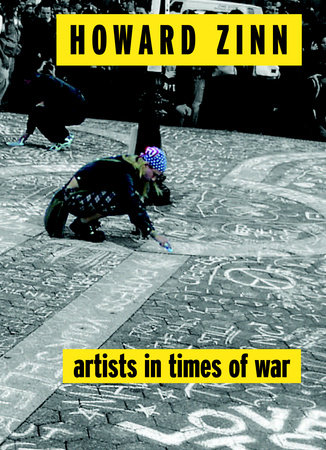
In Artists in Times of War, Zinn looks at the possibilities to create such apertures through art, film, activism, publishing, and through our everyday lives. In this collection of four essays—three of which are previously unpublished—the author of A People’s History of the United States writes about why “to criticize the government is the highest act of patriotism.”
“It wasn’t until I was in a war that I realized that there are no such things as good wars and bad wars,” writes Zinn in the book’s opening essay. It is this realization that Zinn tracks through each of the book’s chapters, with each focusing on a different cultural manifestation of war resistance. Chapter One examines the unique role of the artist to “transcend his or her moment” to critique power and inspire others to challenge authority. Chapter Two follows the example of Emma Goldman and anarchism. Chapter Three looks at how Hollywood has used film as a forum for resistance. The book concludes with a historic essay on the role that grassroots pamphlet publishing has played in US movement building and resistance. Filled with quotes and examples from the likes of Bob Dylan, Mark Twain, e. e. cummings, Thomas Paine, Joseph Heller, and Emma Goldman, Zinn’s essays discuss America’s rich cultural counternarratives to war, so needed in these days of unchallenged US militarism.
In Artists in Times of War, Zinn looks at the possibilities to create such apertures through art, film, activism, publishing, and through our everyday lives. In this collection of four essays—three of which are previously unpublished—the author of A People’s History of the United States writes about why “to criticize the government is the highest act of patriotism.”
“It wasn’t until I was in a war that I realized that there are no such things as good wars and bad wars,” writes Zinn in the book’s opening essay. It is this realization that Zinn tracks through each of the book’s chapters, with each focusing on a different cultural manifestation of war resistance. Chapter One examines the unique role of the artist to “transcend his or her moment” to critique power and inspire others to challenge authority. Chapter Two follows the example of Emma Goldman and anarchism. Chapter Three looks at how Hollywood has used film as a forum for resistance. The book concludes with a historic essay on the role that grassroots pamphlet publishing has played in US movement building and resistance. Filled with quotes and examples from the likes of Bob Dylan, Mark Twain, e. e. cummings, Thomas Paine, Joseph Heller, and Emma Goldman, Zinn’s essays discuss America’s rich cultural counternarratives to war, so needed in these days of unchallenged US militarism.

Author
Howard Zinn
HOWARD ZINN’s (1922–2010) great subject isn’t war, but peace. After his experience as a bombardier in World War II, he became convinced that there could be no such thing as a “just war,” as the vast majority of modern warfare’s victims are made up of innocent civilians. In his books, including A People’s History of the United States and its companion volume, Voices of a People’s History of the United States, Zinn affirms the power of the masses to influence major events. Through a lifetime of pointed scholarship and principled civil disobedience, he has led and continues to lead generations in the ways of peace.
Learn More about Howard Zinn