“My intention is to portray a truly beautiful soul.” —Dostoevsky
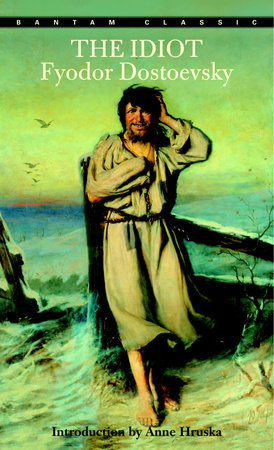
Despite the harsh circumstances besetting his own life—abject poverty, incessant gambling, the death of his youngest child—Dostoevsky produced a second masterpiece, The Idiot, after completing Crime and Punishment. In it, a saintly man, Prince Myshkin, is thrust into the heart of a society more concerned with wealth, power, and sexual conquest than with the ideals of Christianity. Myshkin soon finds himself at the center of a violent love triangle in which a notorious woman and a beautiful young girl become rivals for his affections.
Extortion, scandal, and murder follow, testing Myshkin’s moral feelings, as Dostoevsky searches through the wreckage left by human misery to find “man in man.” The Idiot is a quintessentially Russian novel, one that penetrates the complex psyche of the Russian people. “They call me a psychologist,” wrote Dostoevsky. “That is not true. I’m only a realist in the higher sense; that is, I portray all the depths of the human soul.”







 QUICK VIEW