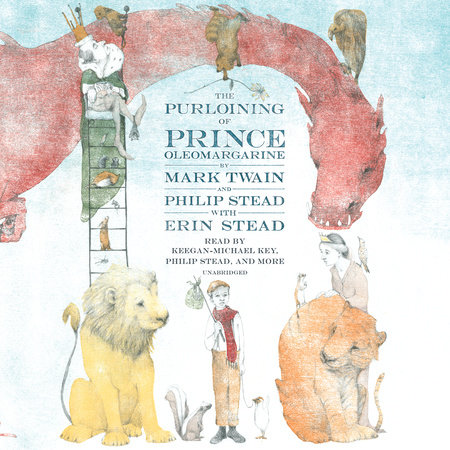
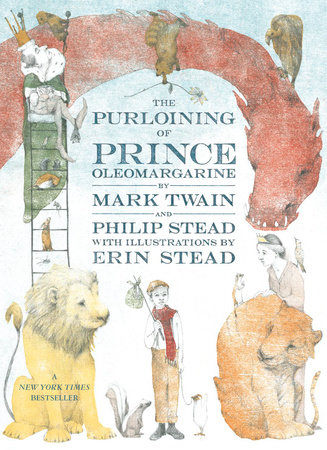
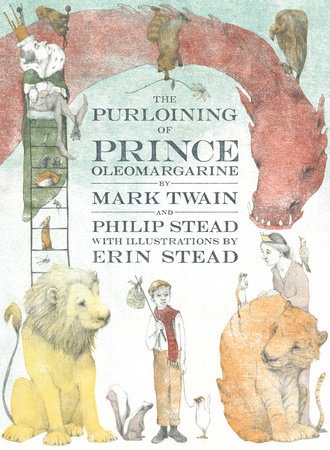
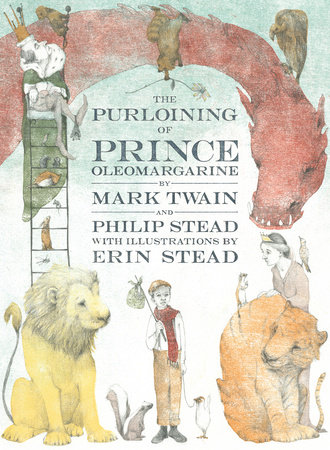
In a hotel in Paris one evening in the 1879, Mark Twain sat with his young daughters, who begged their father for a story. Choosing a picture from a magazine to get started, Twain began telling them the tale of Johnny, a poor boy in possession of some magical seeds, who finds himself on a quest to rescue a stolen prince. Later, Twain would jot down some rough notes about the story, but the tale was left unfinished . . . until now.
Plucked from the Mark Twain archives at the University of California, Berkeley, Twain’s notes now form the foundation of a fairy tale picked up over a century later. With only Twain’s fragmentary script and a story that stops partway as his guide, author Philip Stead has written a tale that imagines what might have been if Twain had fully realized this work. This is a story that reaches through time and brings us the debut children’s book of America’s most legendary writer, envisioned by one of today’s most important names in children’s literature.
Read by Keegan-Michael Key and Philip Stead, with Mark Bramhall as the voice of Mark Twain, Julia Whelan as Susy Clemens, and an Editor’s Note read by Frances Gilbert.
Author
Mark Twain
MARK TWAIN, considered one of the greatest writers in American literature, was born Samuel Clemens in Florida, Missouri, in 1835, and died in Redding, Connecticut in 1910. As a young child, he moved with his family to Hannibal, Missouri, on the banks of the Mississippi River, a setting that inspired his two best-known novels, The Adventures of Tom Sawyer and Adventures of Huckleberry Finn. In his person and in his pursuits, he was a man of extraordinary contrasts. Although he left school at 12 when his father died, he was eventually awarded honorary degrees from Yale University, the University of Missouri, and Oxford University. His career encompassed such varied occupations as printer, Mississippi riverboat pilot, journalist, travel writer, and publisher. He made fortunes from his writing but toward the end of his life he had to resort to lecture tours to pay his debts. He was hot-tempered, profane, and sentimental—and also pessimistic, cynical, and tortured by self-doubt. His nostalgia for the past helped produce some of his best books. He lives in American letters as a great artist, described by writer William Dean Howells as “the Lincoln of our literature.” Twain and his wife, Olivia Langdon Clemens, had four children—a son, Langdon, who died as an infant, and three daughters, Susy, Clara, and Jean.
Learn More about Mark TwainAuthor
Philip C. Stead
PHILIP STEAD is the author of the Caldecott Medal–winning book A Sick Day for Amos McGee. With his wife, illustrator Erin Stead, he also created Bear Has a Story to Tell, Lenny & Lucy, and The Purloining of Prince Oleomargarine, based on a previously-unpublished children’s story by Mark Twain. Philip has also written and illustrated his own books, including Hello, My Name Is Ruby; Jonathan and the Big Blue Boat; and A Home for Bird. Philip and Erin live in northern Michigan. Visit Philip online at philipstead.com.
Learn More about Philip C. SteadIllustrator
Erin Stead
ERIN STEAD is the illustrator of the Caldecott Medal-winning A Sick Day for Amos McGee and its sequel, Amos McGee Misses the Bus, and the New York Times bestseller The Purloining of Prince Oleomargarine. Her other acclaimed picture books include: Tony; And Then It’s Spring; Bear Has a Story to Tell; Lenny & Lucy; If You Want to See a Whale; The Uncorker of Ocean Bottles; and Music for Mr. Moon. She lives in Michigan with her husband, author/illustrator Philip Stead. Visit Erin online at erinstead.com.
Learn More about Erin Stead