“Reading this, it’s hard to not see alarming warning signs about today’s world—intolerance, extremism, misinformation, institutional decay, fanaticism and fundamentalism, technological disruption, demagogues, charlatans, and con artists… But I love that it also gives us solutions.” –Ryan Holiday, author of The Daily Stoic
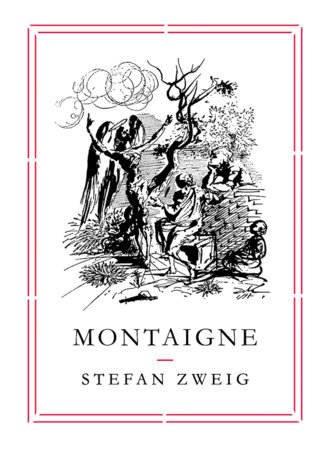
A brilliant and impassioned biography of one of the founding fathers of humanism, from one of its greatest defenders in the 20th century.
“An invaluable addition to Zweig’s canon, casting as much light on the author’s own preoccupation with personal and individual liberty as it does on Montaigne.” —Independent
Written during the Second World War, Zweig’s typically passionate and readable biography of Michel de Montaigne is also a heartfelt argument for the importance of intellectual freedom, tolerance and humanism.
Zweig was already an émigré—driven far from a Europe torn apart by totalitarianism and war—when, in a damp Brazilian cellar, he found an old copy of Michel de Montaigne’s Essais. Montaigne and his masterpiece were to become Zweig’s last great meeting of minds, for both men were living through times of great turmoil: Montaigne in retreat from France’s appalling wars of religion, and Zweig amid the rise of Nazism across Europe. Just as Montaigne sought to remain aloof from the factionalism of his day, so Zweig tried to the last to defend his freedom of thought, and argue for peace and compromise.
With the intense psychological acuity and elegant prose so characteristic of Zweig’s fiction, this account of Montaigne’s life asks how we ought to think, how to face the world, and how to live. One of the final works Zweig wrote before his suicide, it offers both a brilliantly impassioned portrait of a great mind, and a moving plea for tolerance in a world ruled by cruelty.