

Best Seller
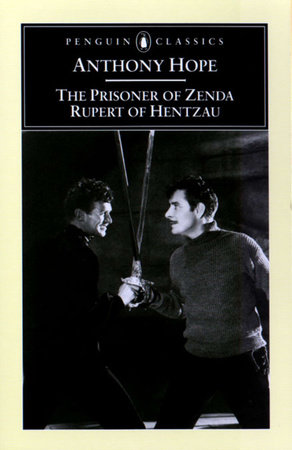
The Prisoner of Zenda and Rupert of Hentzau
By Anthony HopeIntroduction by Gary Hoppenstand
Ebook
Published on Jan 01, 2000 | 400 Pages



Regarded by many critics as the finest adventure story ever written — and certainly one of the most popular — The Prisoner of Zenda (1894) tells the story of Rudolf Rassendyl, a dashing English gentleman who bears an uncanny resemblance to the ruler of the fictional kingdom of Ruritania. Rassendyl masquerades as the king in order to save the country from a treacherous plot and secures the release of the wronged prisoner. In the process he wins the heart of the beautiful princess Flavia, but ultimately surrenders the crown and the hand of his beloved princess to the rightful ruler.
Rupert of Hentzau, which ends in tragedy rather than triumph, is the darker, more problematic sequel to The Prisoner of Zenda. Full of swash-buckling feats of heroism as well as witty irony, these adventure tales are also wonderfully executed satires on late nineteenth-century European politics.
Author
Anthony Hope
Anthony Hope is the pseudonym of Anthony Hope Hawkins, a successful and prolific author of fiction and drama. The son of a school headmaster, Hope was born in London in 1863. While practicing law, Hope also experimented with creative writing, and he published his first novel, a political satire entitled A Man of Mark, at his own expense in 1890. With the publication of his most famous novel, The Prisoner of Zenda, in 1894, Hope abandoned his legal career to write full-time, penning the short story collection, The Heart of Princess Osra (1896), and the Zenda sequel, Rupert of Hentzau (1898). Throughout his productive life, Hope published a wide variety of fiction, in areas ranging from the light domestic comedy of The Dolly Dialogues (1894) to the more serious fiction of Simon Dole (1889). He died on July 8, 1933.
Learn More about Anthony Hope QUICK VIEW
 QUICK VIEW
 QUICK VIEW
 QUICK VIEW
 QUICK VIEW
 QUICK VIEW
 QUICK VIEW
 QUICK VIEW
 QUICK VIEW
 QUICK VIEW