Christian Century:
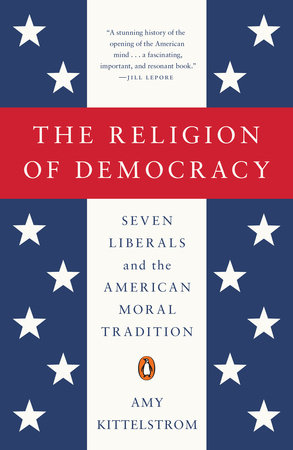
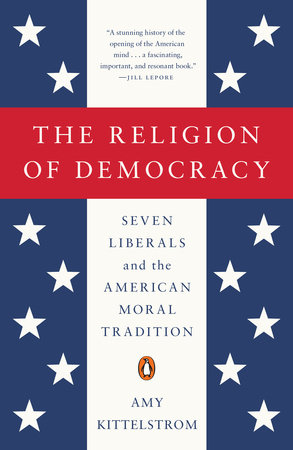
“The Religion of Democracy is an extremely well-researched and interesting description of the sustaining arguments and tenets of the American Reformation, as well as an informative portrayal of the complex lives of some of its central figures.”
The San Francisco Chronicle:
“Historian Kittelstrom brilliantly presents the historic relationship between Christianity and social progress in American history.”
Publishers Weekly (starred review):
“Kittelstrom’s history stands out for its deeply textured treatment of each of these profoundly important thinkers, permitting appreciation of the influences that brought them to an enlightened view of faith and its sociopolitical implications. This timely, important work by an excellent scholar is part of the Penguin History of American Life series.”
Booklist:
“Historian Kittelstrom examines the lives and the writings of seven prominent American liberals and suggests that today’s pluralistic political liberalism is a direct descendant of the religious liberalism that emerged in, and transformed, the eighteenth and nineteenth centuries… The result is a lively and erudite reminder of pluralism’s deep roots in American soil, and religion’s role in putting them there.”
Library Journal (starred review):
“Kittelstrom explores the private and intellectual lives of each individual and provides new insights into the cultural history of liberalism… Readers will appreciate the skillful weaving of primary sources into a compelling chronicle of an idea told through individual experiences.”
CHOICE Magazine:
“This book challenges contemporary conversations that conflate secularism and liberalism and expands the scholarly understanding of liberalism in the US. Highly recommended.”
Jill Lepore, author of Book of Ages and The Secret History of Wonder Woman:
“The Religion of Democracy is a stunning history of the opening of the American mind. Through a shrewd study of seven subtle thinkers, Kittelstrom explores the place of belief, faith, and virtue in the intellectual traditions that lie behind American liberalism. A fascinating, important, and resonant book.”
Daniel Walker Howe, Pulitzer Prize-winning author of What Hath God Wrought: The Transformation of America, 1815-1848:
“Amy Kittelstrom here pours new life into intellectual history for scholars and concerned citizens, whether they are religious or not. She traces the commitments of present-day civic liberalism—free inquiry, cultural pluralism, public education, and compassion for the disadvantaged—not to the rise of secularism but to the Christian theological liberalism of New England at the time of the American Revolution. She finds these origins in what she terms, appropriately, an American Reformation.”
David D. Hall, Harvard University; author of A Reforming People:
“Turning the pages of this remarkable book, I found myself moved not only by its intellectual range and the lucidity of Kittelstrom’s prose but also by its central theme, the emergence in nineteenth-century America of an ethical commitment to democracy’s highest moral and practical possibilities—in effect, a ‘religion of democracy.’ An illuminating story, for our times as well as for what it tells us about the past.”







 QUICK VIEW