

Best Seller
Hardcover
$30.00
Published on Dec 12, 2012 | 912 Pages



Author
George Eliot
MARY ANN EVANS was born on November 22, 1819, at Chilvers Coton, Warwickshire, England. After her father’s death she settled in London and from 1851 to 1854 she served as a writer and editor of the Westminster Review, the organ of the Radical party. In London she met she met George Henry Lewes, a journalist and advanced thinker. Lewes was separated from his wife, who had had two sons by another man, but had been unable to obtain a divorce. In a step daring for Victorian times, Mary Ann Evans began living openly with Lewes in 1854, in a union they both considered as sacred as a legal marriage and one that lasted until his death in 1878. With Lewes’s encouragement, Mary Ann Evans wrote her first fictional work, “The Sad Fortunes of the Reverend Amos Barton,” for Blackwood’s Magazine in 1857; it was followed by two more stories published under the pseudonym George Elliot—“George” because it was Lewes’s name and “Eliot” because, she said, it was “a good mouth-filling, easily pronounced word.” At the age of thirty-nine she used her memories of Warwickshire to write her first long novel, Adam Bede (1859), a book that established her as the foremost woman novelist in her day. Then came The Mill on the Floss (1860), Silas Marner (1861), and Romola (1863). Her masterpiece and one of the greatest English novels, Middlemarch, was published in 1871–72. Her last work was Daniel Deronda (1876). Before her death in 1880, she had been recognized by her contemporaries as the greatest living writer of English fiction.
Learn More about George EliotIllustrator
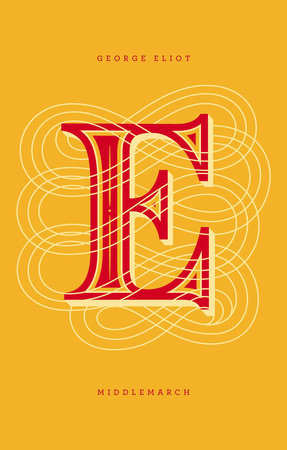
Jessica Hische
Jessica Hische grew up in Pennsylvania. She currently lives in San Francisco, where she works as a letterer, illustrator, type designer, and relentless procrastiworker. Clients include Wes Anderson, Dave Eggers, The New York Times, Tiffany & Co., OXFAM America, McSweeney’s, American Express, Target, Victoria’s Secret, Chronicle Books, Nike, and Samsung. website: jessicahische.is | twitter: @jessicahische.
Learn More about Jessica Hische QUICK VIEW
 QUICK VIEW
 QUICK VIEW
 QUICK VIEW
 QUICK VIEW
 QUICK VIEW
 QUICK VIEW
 QUICK VIEW
 QUICK VIEW
 QUICK VIEW