Charles Darwin’s account of the momentous voyage which set in motion the current of intellectual events leading to The Origin of Species
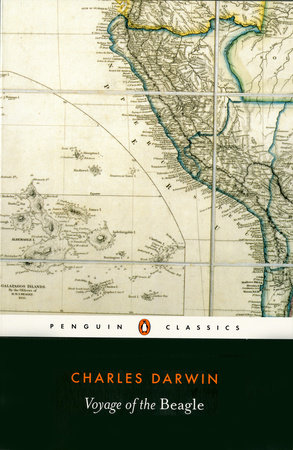
When HMS Beagle sailed out of Devonport on 27 December 1831, Charles Darwin was twenty-two and setting off on the voyage of a lifetime. His journal, here reprinted in a shortened form, shows a naturalist making patient observations concerning geology, natural history, people, places and events. Volcanoes in the Galapagos, the Gossamer spider of Patagonia and the Australasian coral reefs – all are to be found in these extraordinary writings. The insights made here were to set in motion the intellectual currents that led to the theory of evolution, and the most controversial book of the Victorian age: The Origin of Species. This volume reprints Charles Darwin’s journal in a shortened form. In their introduction Janet Brown and Michael Neve provide a background to Darwin’s thought and work, and this edition also includes notes, maps, appendices and an essay on scientific geology and the Bible by Robert FitzRoy, Darwin’s friend and Captain of the Beagle.
For more than seventy years, Penguin has been the leading publisher of classic literature in the English-speaking world. With more than 1,700 titles, Penguin Classics represents a global bookshelf of the best works throughout history and across genres and disciplines. Readers trust the series to provide authoritative texts enhanced by introductions and notes by distinguished scholars and contemporary authors, as well as up-to-date translations by award-winning translators.







 QUICK VIEW