

Best Seller
Paperback
$14.00
Published on Oct 10, 2000 | 432 Pages
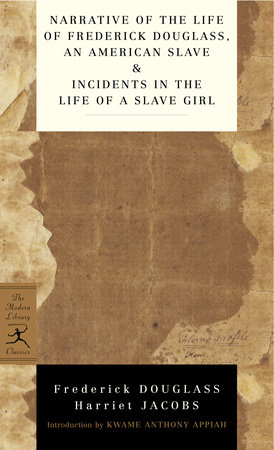
Introduction by Kwame Anthony Appiah
Commentary by Jean Fagan Yellin and Margaret Fuller
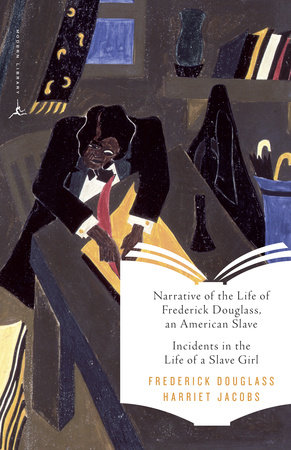
This Modern Library edition combines two of the most important African American slave narratives—crucial works that each illuminate and inform the other.
Frederick Douglass’s Narrative, first published in 1845, is an enlightening and incendiary text. Born into slavery, Douglass became the preeminent spokesman for his people during his life; his narrative is an unparalleled account of the dehumanizing effects of slavery and Douglass’s own triumph over it.
Like Douglass, Harriet Jacobs was born into slavery, and in 1861 she published Incidents in the Life of a Slave Girl, now recognized as the most comprehensive antebellum slave narrative written by a woman. Jacobs’s account broke the silence on the exploitation of African American female slaves, and it remains essential reading.
Includes a Modern Library Reading Group Guide
Commentary by Jean Fagan Yellin and Margaret Fuller
This Modern Library edition combines two of the most important African American slave narratives—crucial works that each illuminate and inform the other.
Frederick Douglass’s Narrative, first published in 1845, is an enlightening and incendiary text. Born into slavery, Douglass became the preeminent spokesman for his people during his life; his narrative is an unparalleled account of the dehumanizing effects of slavery and Douglass’s own triumph over it.
Like Douglass, Harriet Jacobs was born into slavery, and in 1861 she published Incidents in the Life of a Slave Girl, now recognized as the most comprehensive antebellum slave narrative written by a woman. Jacobs’s account broke the silence on the exploitation of African American female slaves, and it remains essential reading.
Includes a Modern Library Reading Group Guide
Author
Frederick Douglass
FREDERICK DOUGLASS, an outspoken abolitionist, was born into slavery in Maryland in 1818 and, after his escape in 1838, repeatedly risked his own freedom as a prominent anti-slavery lecturer, writer, and publisher. After the Civil War he continued to work as a social reformer, supported women’s suffrage, and held several public offices. He died in 1895.
Learn More about Frederick DouglassYou May Also Like
The Secret Agent
Paperback
$18.00
Incidents in the Life of a Slave Girl
Paperback
$15.00
The Selected Poetry of Rainer Maria Rilke
Paperback
$18.00
The Portable Conrad
Paperback
$30.00
The Great Cat
Hardcover
$20.00
The Golden Bowl
Paperback
$13.00
Disquiet, Please!
Paperback
$23.00
The Portable Shakespeare
Paperback
$27.00
Light in August
Hardcover
$26.00
×