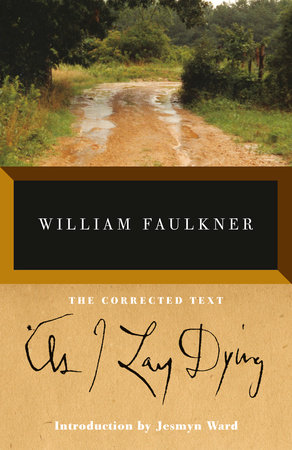

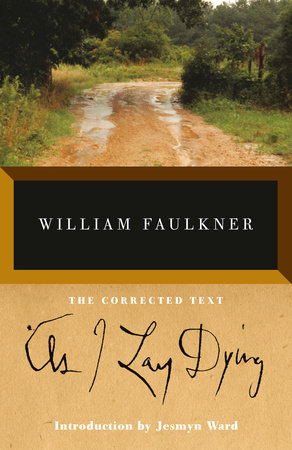

As I Lay Dying is one of the most influential novels in American fiction in structure, style, and drama. Narrated in turn by each of the family members, including Addie herself as well as others, the novel ranges in mood from dark comedy to the deepest pathos.
“I set out deliberately to write a tour-de-force. Before I ever put pen to paper and set down the first word I knew what the last word would be and almost where the last period would fall.” —William Faulkner on As I Lay Dying
This edition reproduces the corrected text of As I Lay Dying as established in 1985 by Noel Polk.
Author
William Faulkner
William Faulkner, one of the greatest writers of the twentieth century, was born in New Albany, Mississippi, on September 25, 1897. He published his first book, The Marble Faun, in 1924, but it is as a literary chronicler of life in the Deep South—particularly in the fictional Yoknapatawpha County, the setting for several of his novels—that he is most highly regarded. In such novels as The Sound and the Fury, As I Lay Dying, Light in August, and Absalom, Absalom! he explored the full range of post–Civil War Southern life, focusing both on the personal histories of his characters and on the moral uncertainties of an increasingly dissolute society. In combining the use of symbolism with a stream-of-consciousness technique, he created a new approach to fiction writing. In 1949 he was awarded the Nobel Prize for Literature. William Faulkner died in Byhalia, Mississippi, on July 6, 1962.
Learn More about William Faulkner