

Best Seller
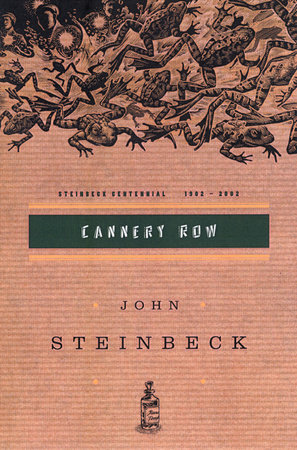
Cannery Row
Paperback
$21.00
Published on Feb 05, 2002 | 192 Pages



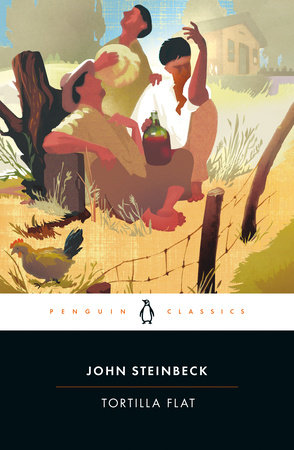
First published in 1945, Cannery Row focuses on the acceptance of life as it is—both the exuberance of community and the loneliness of the individual. John Steinbeck draws on his memories of the real inhabitants of Monterey, California, and interweaves their stories in this world where only the fittest survive—creating what is at once one of his most humorous and poignant works. In Cannery Row, John Steinbeck returns to the setting of Tortilla Flat to create another evocative portrait of life as it is lived by those who unabashedly put the highest value on the intangibles—human warmth, camaraderie, and love.
This Steinbeck Centennial Edition features French flaps and deckled pages.
For more than sixty-five years, Penguin has been the leading publisher of classic literature in the English-speaking world. With more than 1,500 titles, Penguin Classics represents a global bookshelf of the best works throughout history and across genres and disciplines. Readers trust the series to provide authoritative texts enhanced by introductions and notes by distinguished scholars and contemporary authors, as well as up-to-date translations by award-winning translators.
Author
John Steinbeck
John Steinbeck, born in Salinas, California, in 1902, grew up in a fertile agricultural valley, about 25 miles from the Pacific Coast. Both the valley and the coast would serve as settings for some of his best fiction. In 1919 he went to Stanford University, where he intermittently enrolled in literature and writing courses until he left in 1925 without taking a degree. During the next five years he supported himself as a laborer and journalist in New York City, all the time working on his first novel, Cup of Gold (1929). After marriage and a move to Pacific Grove, he published two California books, The Pastures of Heaven (1932) and To a God Unknown (1933), and worked on short stories later collected in The Long Valley (1938). Popular success and financial security came only with Tortilla Flat (1935), stories about Monterey’s paisanos. A ceaseless experimenter throughout his career, Steinbeck changed courses regularly. Three powerful novels of the late 1930s focused on the California laboring class: In Dubious Battle (1936), Of Mice and Men (1937), and the book considered by many his finest, The Grapes of Wrath (1939). The Grapes of Wrath won both the National Book Award and the Pulitzer Prize in 1939. Steinbeck received the Nobel Prize in Literature in 1962, and, in 1964, he was presented with the United States Medal of Freedom by President Lyndon B. Johnson. Steinbeck died in New York in 1968. Today, more than 30 years after his death, he remains one of America’s greatest writers and cultural figures.
Learn More about John Steinbeck QUICK VIEW
 QUICK VIEW
 QUICK VIEW
 QUICK VIEW
 QUICK VIEW
 QUICK VIEW
 QUICK VIEW
 QUICK VIEW
 QUICK VIEW