





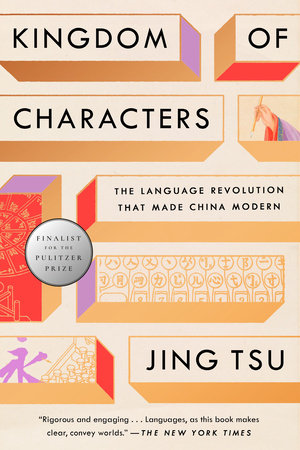

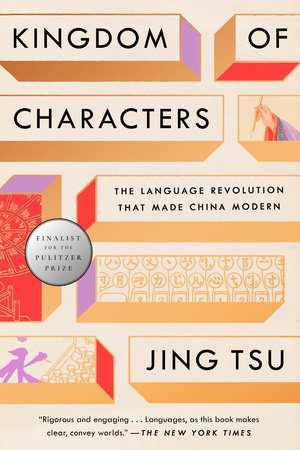
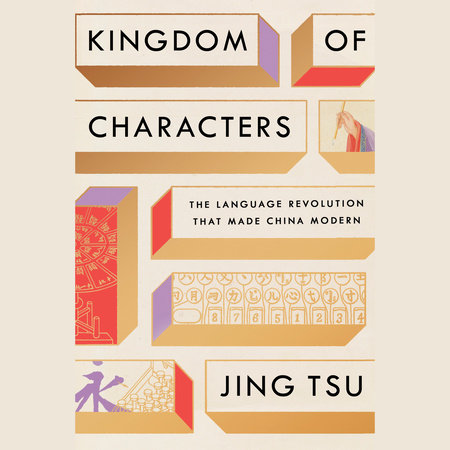
PULITZER PRIZE FINALIST
A New York Times Notable Book of 2022
What does it take to reinvent a language?
After a meteoric rise, China today is one of the world’s most powerful nations. Just a century ago, it was a crumbling empire with literacy reserved for the elite few, as the world underwent a massive technological transformation that threatened to leave them behind. In Kingdom of Characters, Jing Tsu argues that China’s most daunting challenge was a linguistic one: the century-long fight to make the formidable Chinese language accessible to the modern world of global trade and digital technology.
Kingdom of Characters follows the bold innovators who reinvented the Chinese language, among them an exiled reformer who risked a death sentence to advocate for Mandarin as a national language, a Chinese-Muslim poet who laid the groundwork for Chairman Mao’s phonetic writing system, and a computer engineer who devised input codes for Chinese characters on the lid of a teacup from the floor of a jail cell. Without their advances, China might never have become the dominating force we know today.
With larger-than-life characters and an unexpected perspective on the major events of China’s tumultuous twentieth century, Tsu reveals how language is both a technology to be perfected and a subtle, yet potent, power to be exercised and expanded.
A New York Times Notable Book of 2022
What does it take to reinvent a language?
After a meteoric rise, China today is one of the world’s most powerful nations. Just a century ago, it was a crumbling empire with literacy reserved for the elite few, as the world underwent a massive technological transformation that threatened to leave them behind. In Kingdom of Characters, Jing Tsu argues that China’s most daunting challenge was a linguistic one: the century-long fight to make the formidable Chinese language accessible to the modern world of global trade and digital technology.
Kingdom of Characters follows the bold innovators who reinvented the Chinese language, among them an exiled reformer who risked a death sentence to advocate for Mandarin as a national language, a Chinese-Muslim poet who laid the groundwork for Chairman Mao’s phonetic writing system, and a computer engineer who devised input codes for Chinese characters on the lid of a teacup from the floor of a jail cell. Without their advances, China might never have become the dominating force we know today.
With larger-than-life characters and an unexpected perspective on the major events of China’s tumultuous twentieth century, Tsu reveals how language is both a technology to be perfected and a subtle, yet potent, power to be exercised and expanded.
Author
Jing Tsu
Jing Tsu is John M. Schiff Professor of East Asian Languages and Literatures and Comparative Literature and Chair of the Council on East Asian Studies at Yale. She specializes in Chinese literature, history, and culture from the nineteenth century to the present, and received her doctorate in Chinese studies from Harvard. A Guggenheim Fellow, she has held fellowships and distinctions from Harvard, Stanford, and Princeton institutes.
Learn More about Jing TsuYou May Also Like
 QUICK VIEW
The Rise of Abraham Cahan
Hardcover
$26.00
QUICK VIEW

Bush Versus the Environment
Paperback
$22.00
QUICK VIEW
The World in a Grain
Paperback
$17.00
QUICK VIEW
People from Bloomington
Paperback
$14.00
QUICK VIEW
The Silk Roads
Paperback
$23.00
QUICK VIEW
Morgan
Paperback
$20.00
QUICK VIEW
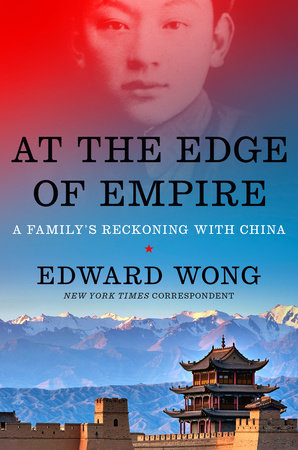
At the Edge of Empire
Hardcover
$32.00
QUICK VIEW

I Am on the Hit List
Paperback
$18.00
QUICK VIEW

Tertulia
Paperback
$20.00
QUICK VIEW

Whatever You Say I Am
Paperback
$17.00


×