An Q&A with Stephanie Graves
What prompted you to write a novel set in Britain during WWII?
World War II has long lived in the corners of my mind as a great paradox. Amidst a maelstrom of prejudice, violence, and hate, regular people selflessly stepped up and risked everything to fight against the tide of evil. It was humanity at its best and at its worst, and those long years should never be forgotten or kept from the history books. Even seventy-five years later, so much of it has never been widely told. I chose to set this story in an English village because I wanted to set a lighter tone and focus on lesser known aspects of the war on the homefront.
What was the most challenging aspect of writing this book?
I found the most challenging part of the writing process to be the act of reining in the research in order to get on with the task of writing. There is a veritable treasure trove of information available on the war years, and while at times it may seem as if an answer is troublingly out of reach, at others, the extra effort of searching may, in fact, lead to an intriguing line of inquiry in another direction entirely. There’ve been many days I’ve slipped down the rabbit hole, only to surface hours later, feeling a satisfied sense of accomplishment, despite not having discovered what I set out to. I love reading all the personal stories, jam-packed with quirky little details that paint such vivid and varied pictures of life during that momentous time in history. Those details aren’t the ones taught in history books, but they are important nonetheless.
What sort of research do you do throughout the process of writing a novel?
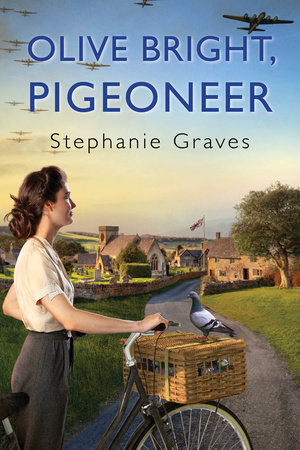
To get a feel for village life during the war—and put me in the mindset of wartime Britain, I watched Home Fires and Foyle’s War. At the same time, I scoured the Internet for details on the little-known role of pigeons during the war, as well as the Special Operations Executive, particularly their school for sabotage, Station XVII: Brickendonbury Manor. With this base of knowledge and an ever-developing plot, I focused my research on fleshing out the details for individual character storylines, searching for information on the Women’s Institute, the Girl Guides, RAF training, evacuees, and Mass Observation, just to name a few. I found so many wonderful details in the articles of the BBC’s WW2 People’s War and collections of Mass Observation diaries, and I attempted to stitch all of this information together to create a believable picture of Olive’s experiences in both Pipley and Brickendonbury Manor.
Do you have a favorite character in the story? Who was the most fun to write?
Olive is my favorite character in the story, but Miss Husselbee might have been the most fun to write. I love writing dialogue for a character that has no compunction about the words coming out of her mouth. It’s utterly freeing. But sadly, my time with Miss Husselbee was cut a bit short. In contrast, I hope to have plenty of opportunity to put Olive in all sorts of funny, awkward, dangerous, emotional situations to really see her shine.







 QUICK VIEW