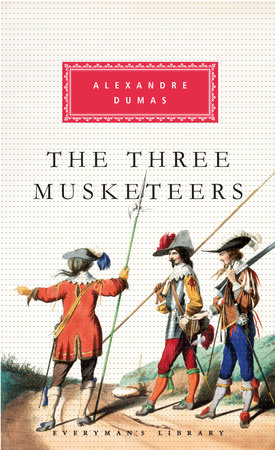
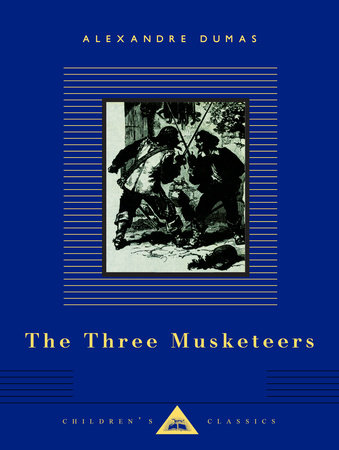
This swashbuckling epic of chivalry, honor, and derring-do, set in France during the 1620s, is richly populated with romantic heroes, unattainable heroines, kings, queens, cavaliers, and criminals in a whirl of adventure, espionage, conspiracy, murder, vengeance, love, scandal, and suspense. Dumas transforms minor historical figures into larger- than-life characters: the Comte d’Artagnan, an impetuous young man in pursuit of glory; the beguilingly evil seductress “Milady”; the powerful and devious Cardinal Richelieu; the weak King Louis XIII and his unhappy queen—and, of course, the three musketeers themselves, Athos, Porthos, and Aramis, whose motto “all for one, one for all” has come to epitomize devoted friendship. With a plot that delivers stolen diamonds, masked balls, purloined letters, and, of course, great bouts of swordplay, The Three Musketeers is eternally entertaining.
Author
Alexandre Dumas
Alexandre Dumas (1802–1870) lived a life as romantic as that depicted in his famous novels. He was born in Villers-Cotterêts, France. His early education was scanty, but his beautiful handwriting secured him a position in Paris in 1822 with the du’Orléans, where he read voraciously and began to write. His first play, Henri III et sa cour (1829), scored a resounding success for its author and the romantic movement. His lavish spending and flamboyant habits led to the construction of his fabulous Château de Monte-Cristo, and in 1851 he fled to Belgium to escape creditors. Dumas’s overall literary output reached more than 277 volumes, but his brilliant historical novels made him the most universally read of all French novelists. With collaborators, mainly Auguste Maquet, Dumas wrote such works as The Three Musketeers (1843–1844); its sequels, Twenty Years After (1845) and the great mystery The Man in the Iron Mask (1845–1850); and The Count of Monte Cristo (1844). His work ignored historical accuracy, psychology, and analysis, but its thrilling adventure and exuberant inventiveness continued to delight readers, and Dumas remains one of the prodigies of nineteenth-century French literature.
Learn More about Alexandre Dumas