Best Seller
Paperback
$35.00
Published on Apr 09, 2024 | 360 Pages
An extended argument that cognitive phenomena—perceiving, imagining, remembering—can be best explained in terms of an interface between contentless and content-involving forms of cognition.
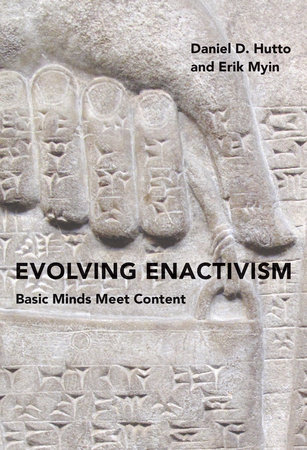
Evolving Enactivism argues that cognitive phenomena—perceiving, imagining, remembering—can be best explained in terms of an interface between contentless and content-involving forms of cognition. Building on their earlier book Radicalizing Enactivism, which proposes that there can be forms of cognition without content, Daniel Hutto and Erik Myin demonstrate the unique explanatory advantages of recognizing that only some forms of cognition have content while others—the most elementary ones—do not. They offer an account of the mind in duplex terms, proposing a complex vision of mentality in which these basic contentless forms of cognition interact with content-involving ones.
Hutto and Myin argue that the most basic forms of cognition do not, contrary to a currently popular account of cognition, involve picking up and processing information that is then used, reused, stored, and represented in the brain. Rather, basic cognition is contentless—fundamentally interactive, dynamic, and relational. In advancing the case for a radically enactive account of cognition, Hutto and Myin propose crucial adjustments to our concept of cognition and offer theoretical support for their revolutionary rethinking, emphasizing its capacity to explain basic minds in naturalistic terms. They demonstrate the explanatory power of the duplex vision of cognition, showing how it offers powerful means for understanding quintessential cognitive phenomena without introducing scientifically intractable mysteries into the mix.

Evolving Enactivism argues that cognitive phenomena—perceiving, imagining, remembering—can be best explained in terms of an interface between contentless and content-involving forms of cognition. Building on their earlier book Radicalizing Enactivism, which proposes that there can be forms of cognition without content, Daniel Hutto and Erik Myin demonstrate the unique explanatory advantages of recognizing that only some forms of cognition have content while others—the most elementary ones—do not. They offer an account of the mind in duplex terms, proposing a complex vision of mentality in which these basic contentless forms of cognition interact with content-involving ones.
Hutto and Myin argue that the most basic forms of cognition do not, contrary to a currently popular account of cognition, involve picking up and processing information that is then used, reused, stored, and represented in the brain. Rather, basic cognition is contentless—fundamentally interactive, dynamic, and relational. In advancing the case for a radically enactive account of cognition, Hutto and Myin propose crucial adjustments to our concept of cognition and offer theoretical support for their revolutionary rethinking, emphasizing its capacity to explain basic minds in naturalistic terms. They demonstrate the explanatory power of the duplex vision of cognition, showing how it offers powerful means for understanding quintessential cognitive phenomena without introducing scientifically intractable mysteries into the mix.
You May Also Like
Hozho
Trade Paperback Original
$20.95
The Sommer of My Life
Hardcover
$25.99
Activate Your Light
Trade Paperback Original
$18.99
The Universe Is Pranking Us
eBook
$2.99
Delulu Is (Not) the Solulu
eBook
$2.99
The Mind Is a Labyrinth with Three Keys
eBook
$2.99
From Doubt to Dharma
eBook
$2.99
Manifest like You Mean It
eBook
$2.99
Mom’s Book of Wisdom
Hardcover
$15.00
×