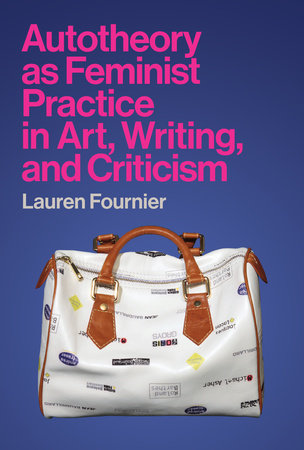
“A useful intellectual history of the ‘autotheoretical impulse.'”—Art in America
“Autotheory as Feminist Practice, then, excels as a “here we are now” grounding; a nervy, contemporary feminist art history syllabus.”—Hyperallergic
“A comprehensive monograph that poses a real range of considerations for both artistic and literary autotheory scholarship and practice.”—Contemporary Women’s Writing
“Rather than being a dense theoretical tome, the text is populated with a number of sensuous, defiant, provocative film stills and photographs of multivalent artworks. Among the most evocative aspects of the text is a general aim at decentring. Fournier gives considerable attention to inverting margins, both structurally and conceptually.”—The Humber Literary Review
“Anyone interested in contemporary feminist art and writing practices would benefit from reading Fournier’s book about this exciting new way of infiltrating theory that has hitherto been dominated by a patriarchal, Eurocentric elite.”—BookArts
“This book is captivating—reading it is an experience akin to the first moment venturing into Judith Butler’s Gender Trouble: Feminism and the Subversion of Identity.”—Woman’s Art Journal
“Autotheory as Feminist Practice is a great tool for discussion and exchange, and not simply a guide. It is a wonderfully rich source, and surely an essential contribution not only to those interested in autotheory: Many of the discussions in it are relevant to anyone engaging with wider concerns in contemporary art, writing, and criticism.”—Passage
“What Fournier’s book does for me—to me—is give name to those artistic works and processes that have always produced a gut-level feeling in me, be it pleasurable or discomforting or downright repulsive. It is here, in the provocative space of the repellent and alluring that autotheory, as both transmedial and transdisciplinary, can trouble existing narratives and hierarchies, and open pathways for new modes of engagement with feminisms and their affiliate histories of art making, writing, and political activism.”—CAA Reviews







 QUICK VIEW