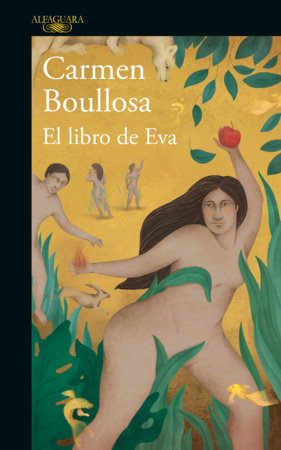
«Si fuera verdad (definitivamente no lo es) que Adán fue creado de polvo y un soplo, al primero lo acarreó el Ángel de la Muerte, y el soplo que lo insufló, por lo tanto, fue de pavor y odio.» ¿Y si todo lo que se nos ha contado sobre el Paraíso fuera al revés?
Frente a lo que pareciera un manuscrito apócrifo que contiene diez libros y 91 pasajes, Eva decide contar su versión: ni fue creada a partir de la costilla de Adán, ni es exacto que fuera expulsada por la manzana y la serpiente, ni la historia de Abel y Caín es la que cuentan, ni la del Diluvio, ni la de la Torre de Babel…
Con una brillante prosa, Carmen Boullosa le da una vuelta de tuerca al libro del Génesis para desmontar la figura masculina y reconstruir el mundo, el origen de la gastronomía, la domesticación de los animales, el cultivo de la tierra y el placer, a través de la mirada femenina. A partir de esta exploración, a veces divertida y otras dolorosa, El libro de Eva hace un repaso por las historias que nos han contado y que han ayudado a fomentar (y cimentar) la absurda idea de que la mujer es compañera, complemento y hasta accesorio del hombre, lo que abre la puerta a la violencia criminal contra las mujeres. Boullosa las desmiente y las transgrede en esta novela feminista, fundacional y desfachatada.
ENGLISH DESCRIPTION
“If it were true (which it most definitely is not) that Adam was created from dust and a breath, the dust was carried by the Angel of Death, and the breath breathed into him was therefore one of fear and hatred.
What if everything we have been told about Paradise were the opposite? Faced with what appears to be an apocryphal manuscript containing ten books and ninety-one passages, Eve decides to tell her own version: she was not created from Adam’s rib; it is not true that she was expelled because of the apple and the serpent; nor are the stories of Abel and Cain, the Flood, or the Tower of Babel as they have been told…
With brilliant prose, Carmen Boullosa gives a sharp twist to the Book of Genesis, dismantling the masculine figure and reconstructing the world, the origins of gastronomy, the domestication of animals, the cultivation of the land, and pleasure itself through a female gaze. Through this exploration—at times playful, at others painful—The Book of Eve revisits the stories we have been told, stories that have helped foster (and cement) the absurd idea that women are companions, complements, or even accessories to men, an idea that opens the door to criminal violence against women. Boullosa dismantles and transgresses these narratives in this feminist, foundational, and audacious novel.





 QUICK VIEW