


Best Seller
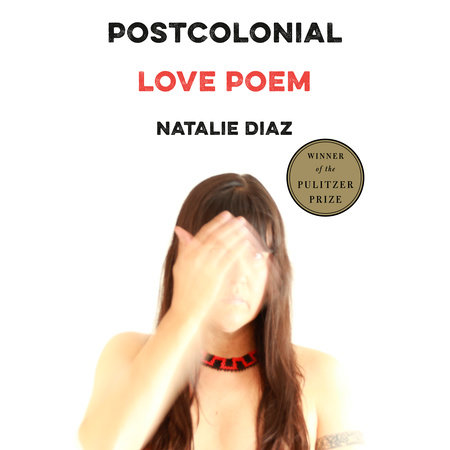
Postcolonial Love Poem
By Natalie DiazRead by Natalie Diaz
Audiobook Download
Published on Jul 13, 2021 | 2 Hours



Winner of the 2021 Pulitzer Prize in Poetry
Finalist for the 2020 National Book Award for Poetry
Finalist for the 2020 Los Angeles Times Book Prize for Poetry
Finalist for the 2020 Forward Prize for Best Collection
Postcolonial Love Poem, the brilliant second collection from Natalie Diaz, holds in its pages the urgent appeal for all bodies―bodies of lovers, family, enemies, as well as of language and rivers and land―to be held dearly. In her lyrical landscape, Diaz tenderly prods the wounds inflicted by America onto its Indigenous peoples. When she states “Let me call my anxiety, desire, then. / Let me call it, a garden,” Diaz allows for the sensation of pleasure to be found in pain; in asserting the autonomy found within desire, the poet simultaneously enables the bodies of Indigenous, Latinx, black, and brown women to be both political and euphoric; and by forcing language to its limits, place is imbued with joy and grief, sensuality and destruction.
In this collection, Natalie Diaz opens up and confronts the conditions from which she writes, embracing bodies like hers and those she loves which have been diminished and erased. As Postcolonial Love Poem offers a picture of an America built on hope and the agency of our future choices, it is love Natalie Diaz offers most tenderly in her hands.
Author
Natalie Diaz
NATALIE DIAZ (US/Mojave/Akimel O’otham) was born and raised in the Fort Mojave Indian Village in Needles, California, on the banks of the Colorado River. She is Mojave and an enrolled member of the Gila River Indian Tribe. She is the author of When My Brother Was an Aztec, winner of the American Book Award; Diaz’s second collection, Postcolonial Love Poem, was published by Graywolf Press in 2020 and won a Pulitzer Prize. She is a MacArthur Foundation Fellow, a Lannan Literary Fellow, and a Native Arts Council Foundation Artist Fellow. She is an alumni of the United States Artists Ford Fellowship and now serves on the board of trustees. She is currently a Mellon Foundation Fellow. Diaz teaches at the Arizona State University Creative Writing MFA program where she is the Maxine and Jonathan Marshall Chair of Modern and Contemporary Poetry and directs the Center for Imagination in the Borderlands.
Learn More about Natalie Diaz QUICK VIEW
 QUICK VIEW
 QUICK VIEW
 QUICK VIEW
 QUICK VIEW
 QUICK VIEW
 QUICK VIEW
 QUICK VIEW
 QUICK VIEW
 QUICK VIEW