“Supple, frank, unafraid of contradictions, Athill’s literary voice has all the courageous intelligence one associates with a certain type of British writer but none of the chill. This [is] the author’s scrupulous reckoning of her own single and childless existence . . .her work in publishing and the thrilling discovery that she, too, could write.” —The New Yorker
“Athill doesn’t write as if no one is watching; she writes as if she’d never even imagined someone might watch, and therefore doesn’t have a scruple to hold on to… she doesn’t pass off heartbreak as a blessing in disguise, or her subsequent successful career as a silver lining. Her abandonment was more like a signpost, something that pointed her to a brambly but invigorating path.” —Hillary Kelly, The New Yorker
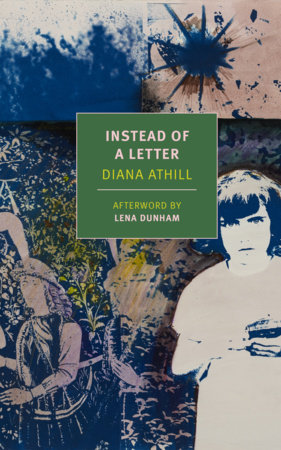
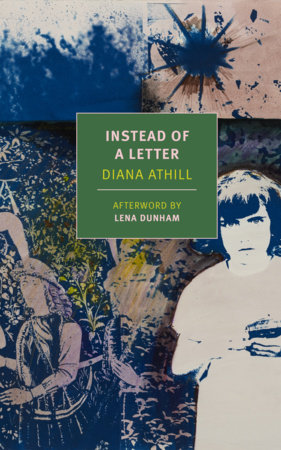
“Released in 1962, Athill’s first memoir, Instead of a Letter, roams from her ’30s childhood at Norfolk’s Ditchingham Hall to her career in the publishing world of Swinging Sixties London—with the aim of answering the all-consuming question: As someone who “missed the opportunity” to marry and have children, what had she lived for?” —Hayley Maitland, Vogue
“Athill writes elegantly about the shabby gentility of her childhood and her later career as a literary editor, but the drama here is in her frankness about the struggle to rebuild a personality taken apart by sadness.” —Susie Steiner, The Guardian
“The reader sees the transformation of the battered soul into a buoyant woman, open-minded and open-hearted.” —Hilary Mantel, Spectator
“Perhaps Athill’s greatest legacy was her refusal to cede to societal expectations as she carved out a persistently unusual world for herself in which the demands of femininity—marriage and children, specifically—were rethought and redefined.” —Lena Dunham, The New York Times
“Taken all in all, Diana Athill was a woman of parts. She endured a worthy loneliness—that of the lifelong single woman—all the while keeping company with her own working mind. Even when her subject was slight or misguided, as I sometimes thought, she wrote to make sense of things. That’s what writing meant to her. Very often the work reads as though she is listening to the sound of her own life coming back at her through the words she is writing, and she is speaking to that sound. In the great tradition of personal narrative, her voice was at once her instrument and her subject.”
—Vivian Gornick, The New York Review of Books






 QUICK VIEW