



READERS GUIDE
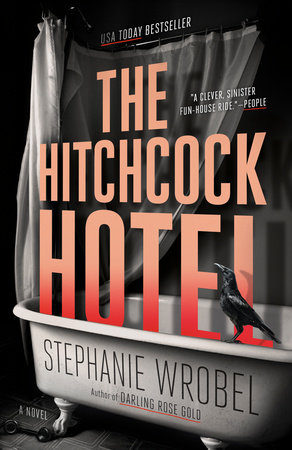
Reader’s GuideThe Hitchcock Hotel by Stephanie Wrobel
Discussion Questions:
1. Which of the characters did you most relate to? Which did you dislike or disagree with? Did your connections change from chapter to chapter? If so, how, and to whom?
2. Hitchcock loved to use the “bomb under the table” analogy to illustrate the difference between surprise and suspense. It goes like this: if two people sit in a café talking for fifteen minutes, and at the end the audience discovers a bomb is under the table, that’s surprise. But if the audience knows from the beginning that the bomb is there, while the two people talking don’t, that’s suspense. The best books have both surprise and suspense, but which is more important to you as a reader?
3. Alfred Smettle says, “I’m no Peeping Tom, but I do like to observe people—their gestures and emotions, the way they talk, the way they think. So many times I have ridden in a train or sat in a lobby wishing I could watch a scene unfold without being part of it, without any awareness of my own corporeality.” We are all voyeurs to some extent, curious about the strangers around us. When does observation cross the line to stalking?
4. Was Alfred’s grudge against his friends justified? Should old grievances be left in the past or should we always attempt to resolve them, even if it is decades later?
5. One of the “Easy A” excerpts in the novel reads: “Hitchcock was never concerned with plausibility in his films. That was the easiest part, he said, so why bother? Call the police, and the story is over. He was much more interested in evoking a mood, in creating suspense.” How important for you is plausibility in a novel?
6. Hitchcock was accused of sexual assault and harassment by actress Tippi Hedren, among other women. If you’re a fan of his work, do these accusations change your feelings about his films? Can we separate the art from the artist?
7. Do you feel Alfred Smettle deserved what he got? Why or why not?
8. Hitchcock once said, “The more successful the villain, the more successful the picture. That’s a cardinal rule.” By this standard, what are
some of the most successful books and films of all time? Who do you view as The Hitchcock Hotel’s villain(s)? Do they have any redeeming qualities?
9. Would you stay in a horror-themed hotel?