Best Seller
Paperback
$22.00
Published on Oct 10, 2006 | 576 Pages
From the author of House of Outrageous Fortune
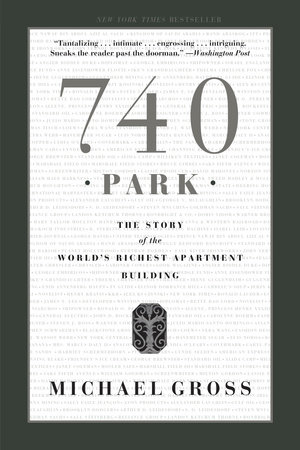
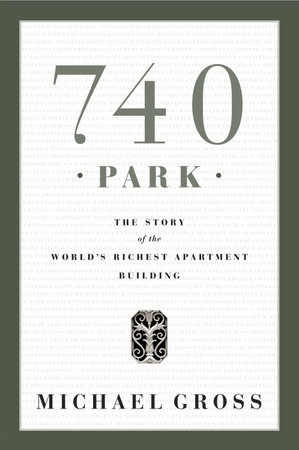
For seventy-five years, it’s been Manhattan’s richest apartment building, and one of the most lusted-after addresses in the world. One apartment had 37 rooms, 14 bathrooms, 43 closets, 11 working fireplaces, a private elevator, and his-and-hers saunas; another at one time had a live-in service staff of 16. To this day, it is steeped in the purest luxury, the kind most of us could only imagine, until now.
The last great building to go up along New York’s Gold Coast, construction on 740 Park finished in 1930. Since then, 740 has been home to an ever-evolving cadre of our wealthiest and most powerful families, some of America’s (and the world’s) oldest money—the kind attached to names like Vanderbilt, Rockefeller, Bouvier, Chrysler, Niarchos, Houghton, and Harkness—and some whose names evoke the excesses of today’s monied elite: Kravis, Koch, Bronfman, Perelman, Steinberg, and Schwarzman. All along, the building has housed titans of industry, political power brokers, international royalty, fabulous scam-artists, and even the lowest scoundrels.
The book begins with the tumultuous story of the building’s construction. Conceived in the bubbling financial, artistic, and social cauldron of 1920’s Manhattan, 740 Park rose to its dizzying heights as the stock market plunged in 1929—the building was in dire financial straits before the first apartments were sold. The builders include the architectural genius Rosario Candela, the scheming businessman James T. Lee (Jacqueline Kennedy Onassis’s grandfather), and a raft of financiers, many of whom were little more than white-collar crooks and grand-scale hustlers.
Once finished, 740 became a magnet for the richest, oldest families in the country: the Brewsters, descendents of the leader of the Plymouth Colony; the socially-registered Bordens, Hoppins, Scovilles, Thornes, and Schermerhorns; and top executives of the Chase Bank, American Express, and U.S. Rubber. Outside the walls of 740 Park, these were the people shaping America culturally and economically. Within those walls, they were indulging in all of the Seven Deadly Sins.
As the social climate evolved throughout the last century, so did 740 Park: after World War II, the building’s rulers eased their more restrictive policies and began allowing Jews (though not to this day African Americans) to reside within their hallowed walls. Nowadays, it is full to bursting with new money, people whose fortunes, though freshly-made, are large enough to buy their way in.
At its core this book is a social history of the American rich, and how the locus of power and influence has shifted haltingly from old bloodlines to new money. But it’s also much more than that: filled with meaty, startling, often tragic stories of the people who lived behind 740’s walls, the book gives us an unprecedented access to worlds of wealth, privilege, and extraordinary folly that are usually hidden behind a scrim of money and influence. This is, truly, how the other half—or at least the other one hundredth of one percent—lives.

For seventy-five years, it’s been Manhattan’s richest apartment building, and one of the most lusted-after addresses in the world. One apartment had 37 rooms, 14 bathrooms, 43 closets, 11 working fireplaces, a private elevator, and his-and-hers saunas; another at one time had a live-in service staff of 16. To this day, it is steeped in the purest luxury, the kind most of us could only imagine, until now.
The last great building to go up along New York’s Gold Coast, construction on 740 Park finished in 1930. Since then, 740 has been home to an ever-evolving cadre of our wealthiest and most powerful families, some of America’s (and the world’s) oldest money—the kind attached to names like Vanderbilt, Rockefeller, Bouvier, Chrysler, Niarchos, Houghton, and Harkness—and some whose names evoke the excesses of today’s monied elite: Kravis, Koch, Bronfman, Perelman, Steinberg, and Schwarzman. All along, the building has housed titans of industry, political power brokers, international royalty, fabulous scam-artists, and even the lowest scoundrels.
The book begins with the tumultuous story of the building’s construction. Conceived in the bubbling financial, artistic, and social cauldron of 1920’s Manhattan, 740 Park rose to its dizzying heights as the stock market plunged in 1929—the building was in dire financial straits before the first apartments were sold. The builders include the architectural genius Rosario Candela, the scheming businessman James T. Lee (Jacqueline Kennedy Onassis’s grandfather), and a raft of financiers, many of whom were little more than white-collar crooks and grand-scale hustlers.
Once finished, 740 became a magnet for the richest, oldest families in the country: the Brewsters, descendents of the leader of the Plymouth Colony; the socially-registered Bordens, Hoppins, Scovilles, Thornes, and Schermerhorns; and top executives of the Chase Bank, American Express, and U.S. Rubber. Outside the walls of 740 Park, these were the people shaping America culturally and economically. Within those walls, they were indulging in all of the Seven Deadly Sins.
As the social climate evolved throughout the last century, so did 740 Park: after World War II, the building’s rulers eased their more restrictive policies and began allowing Jews (though not to this day African Americans) to reside within their hallowed walls. Nowadays, it is full to bursting with new money, people whose fortunes, though freshly-made, are large enough to buy their way in.
At its core this book is a social history of the American rich, and how the locus of power and influence has shifted haltingly from old bloodlines to new money. But it’s also much more than that: filled with meaty, startling, often tragic stories of the people who lived behind 740’s walls, the book gives us an unprecedented access to worlds of wealth, privilege, and extraordinary folly that are usually hidden behind a scrim of money and influence. This is, truly, how the other half—or at least the other one hundredth of one percent—lives.

Author
Michael Gross
Michael Gross is the best-selling author of 740 Park: The Story of the World’s Richest Apartment Building, Rogues’ Gallery: The Secret History of the Lust, Lies, Greed and Betrayals That Made the Metropolitan Museum of Art, Model: The Ugly Business of Beautiful Women and other books. A Contributing Editor of Travel + Leisure and columnist for Crain’s New York Business, he has also written for major publications around the world, including The New York Times, Vanity Fair, New York, Esquire and GQ. He lives in New York City.
Learn More about Michael GrossYou May Also Like
Rogues’ Gallery
Paperback
$19.00
Olga’s Story
Ebook
$14.99
Those Angry Days
Paperback
$23.00
Women of the Raj
Paperback
$22.00
Satan’s Circus
Paperback
$22.00
Blowing My Cover
Paperback
$16.00
Hedy’s Folly
Paperback
$19.00
Hope and Glory
Paperback
$19.00
May Sarton
Paperback
$23.00
×