


READERS GUIDE
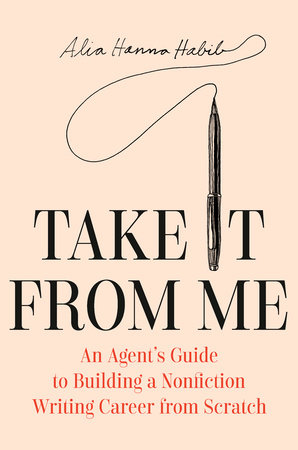
Take It from Me is a guidebook for aspiring nonfiction authors. Alia Hanna Habib, with the unique perspective of a literary agent, takes her readers through the nonfiction publication process, from idea generation to querying, from pitching to editing, from marketing to publication and beyond. Drawing on interviews with editors, agents, marketers, and others, Habib’s valuable insights into the publishing process offer writers context and clarity as they kick-start and grow their nonfiction writing careers.The questions, discussion topics, and reading list will inspire meaningful conversations among community writing groups, aspiring writers, or readers interested in the publishing process.
Questions and Topics for Discussion
1. In the introduction, Alia Hanna Habib outlines her agenting career and personal background. Why do you think she discloses so much about her own experiences in publishing? How does that affect how you see her as an expert?
2. Habib says her first piece of advice for aspiring nonfiction authors is to “aggressively pursue publishing shorter work and to do so with as much upbeat imperviousness to rejection as your heart can muster” (p. 4). Why does she find the pursuit of short-form publication so important? How might the experiences of short-form publication acclimate you to the book publishing process? How might you pursue the publication of short-form writing with the goal of eventually publishing a book?
3. Why does Habib stress the importance of being, or becoming, “the best pitcher of your shorter work”? What do you think makes a good pitch for a short work? For a book? How might you hone your skills in pitching?
4. Take a minute to weigh the pros and cons of the pursuit of an MFA degree laid out in chapter 2. Why might an aspiring author choose to get an MFA or decide not to and to tread a different path? For those who do choose to pursue an MFA, what does Habib recommend for making the most of the MFA experience? How might you hone your writing and editing skills with or without an MFA?
5. In chapter 2.5, what myths does Habib dispel in regard to the oft-dreaded author platform? How does she suggest the aspiring author find or create their own platform? What are the advantages to curating a personable author platform? How might you curate your own author platform in a way that feels authentic to you and your writing?
6. What does Habib mean when she writes, “[Book] proposals are adaptable recipes” (p. 97)? What tips did you glean from the book in creating a persuasive, narrative-driven proposal? How and why might a book proposal need to be adapted to different purposes? How might you write a compelling proposal?
7. How might an aspiring author find comp titles for their book proposal and pitches? How and why should you incorporate them into your pitching and querying? What can comp titles help you understand about the current market? How might they help you and your publisher understand your audience?
8. From page 152-158, Habib provides query letter examples. How are these letters similar? In what ways do they differ? What do you think are the most important features of a query letter to make sure a prospective agent understands your work? How might you incorporate these features into your own query letters?
9. What does the discussion of query letters tell you about the importance of agents in the querying process? What can you as a writer do to make sure you connect with the right agent? What does your ideal author/agent relationship look like and why? How might you ensure that you and your agent have a clear, shared, creative vision of your book? How can you and your agent position yourselves as salable to a Big Five house?
10. Though the editorial process differs from author to author and editor to editor, how does Habib suggest beginning the editorial process, especially as it relates to establishing a productive and creative workflow for both parties? What kind of relationship would you like to have with your editor and why? Have you ever had an experience working with an editor to incorporate editorial feedback? How did that conversation go?
11. At the beginning of chapter 6, Habib recommends an exercise to help manage author expectations come publication day. How might brainstorming achievable personal benchmarks alleviate publication day anxieties and build confidence throughout the publication process? What personal benchmarks would you set before publication? How might you work with your team to achieve them?
12. Habib writes that in the publishing process the author should see themselves as “a colleague, and not as the star” (p. 210). How might an author put this philosophy into practice and work productively with their team throughout the publication process? Where do you think you as an author might be challenged to follow this advice?
13. Once the book is ready to be marketed, what insights might you have on specific audiences and niches that the book might reach? How might you use your platform to connect with these audiences? How might you work with marketers to connect with these audiences?
14. On page 237, author and journalist Andrea Elliott says in an interview that “a book worth doing doesn’t feel like a ‘should’; it’s a ‘must.’ That’s an important distinction. A ‘should’ is never what fires me up in the morning.” What does she mean by “must”? What does this say about the conviction needed for a good nonfiction idea? Is your idea a “must”? Why or why not? How can you get it to that place?
15. Why does Habib end the book interviewing Elliott on her experience writing Invisible Child? How did Invisible Child change throughout the research, interviewing, and writing process? How do you envision your book changing as you research, write, and edit?
Suggested Reading
Bird by Bird by Annie LamottOn Writing Well by William Zinsser
On Writing by Stephen King
The Writing Life by Annie Dillard
The Anatomy of Story: 22 Steps to Becoming a Master Storyteller by John Truby
Draft No. 4: On the Writing Process by John McPhee