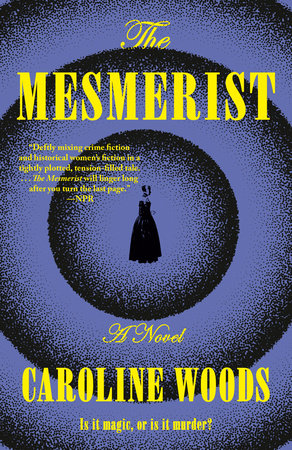
The Mesmerist Reader’s Guide
By Caroline Woods



1. From the moment of Faith’s arrival at Bethany Home, what were your impressions of her? How did your feelings about her evolve as the story of her life gradually came into focus?
2. As the mystery of Priscilla Black unfolded, what were your theories about her disappearance? What do the differences among the novel’s three madams—Swede Kate, Agnes Bly, and Priscilla Black—indicate about the differences in their clientele?
3. At the end of chapter 12, we learn about the early days of Abby’s marriage to Junius: “Though she’d kept a brave face for her new husband, she’ds initially been horrified by this place,” leading her to seek out meaningful work. In creating Bethany Home with Charlotte, how did Abby also fulfill her own need for a sense of home? If Abby had lived in the twenty-first century, how might she have served young women?
4. What common threads run through the early life stories of May, Pearl, Dolly, and Leigh? What made them vulnerable, and what made them strong? What does the stark contrast between Abby’s protected childhood and Faith’s horrific one demonstrate about fate and the families we ultimately get to create for ourselves?
5. If you could have a palm reading from Faith, what questions would you want her to answer? What predictions would you hope she would make?
6. On page 221, Faith scoffs at Hayward’s assertion that she succumbed to his manipulations “when Johnny and I took you upstairs.” Despite the fact that she was being abused and exploited, she didn’t want to think of it “as something they’d persuaded her to do against her will. It had been her choice.” Why is it important for her to tell herself this? What does it take for Faith to be free, and for her life’s path to truly be her choice?
7. Is May naiïve, or is she simply following the few pathways society has given her? What is Hayward’s greatest leverage over her?
8. What does the novel tell us about the ingredients for being mesmerizing, and the reasons someone might fall under the spell of a mesmerist? Who are the mesmerists in our world?
9. When Tuva “escapes,” she tells Abby that the job skills provided at Bethany Home pay meager wages, and we know that Tuva abhorred farmwork. What options would you select if you were in Tuva’s situation?
10. Abby dearly loves Euphemia and sometimes wistfully imagines a life without men. From politics to policing, without a constitutional right to vote, how does she overcome the social restrictions she was born into? Is her religious faith a form of liberation for her?
11. Is money the only motivation that fuels Johnny Lundberg and Harry Hayward, or are there additional motivators for their evil acts?
12. Discuss Miss Rhoades’s revelations. How does her ghost story give voice to the realities of motherhood, as well as mourning?
13. How does Caroline Woods’s storytelling—in The Mesmerist and in her other novels that you have read—bring historical truth to life in a memorable way? What is special about her approach to the lived experiences of women? How did you react to the aAuthor’s nNote and the real-life inspiration for the cast of characters?