LIBRARY JOURNAL
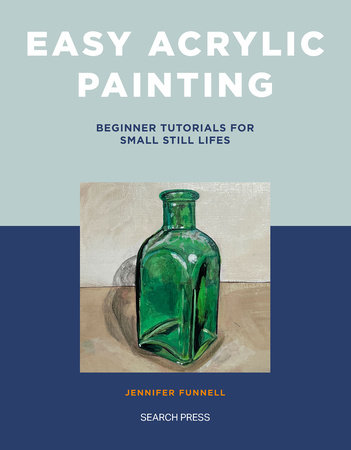
Visual arts instructor Funnell’s book offers 10 still life projects to create using acrylic paints. The first chapter gives a comprehensive overview of the composition of acrylic paint, in which Funnell explains the difference between student-quality and artist-quality paints. There is also an introduction to concepts such as color shift and viscosity and painting techniques that include glazing, dry brush painting, and impasto. Additionally, there’s advice on how to transfer a sketch to a surface for painting. The section on color theory includes an excellent guide to color mixing, creating grays, and identifying tonal variations; Funnell’s definitions of “tint” and “shade” are particularly helpful. For each of the 10 still-life projects that follow, there’s a list of tools and ingredients (including specific paint colors) and illustrated step-by-step instructions. The paintings incorporate shadows, highlights, and reflections through the blending of colors and layers; each project is labeled with an icon indicating the direction of light, an especially valuable feature. VERDICT For readers ready to take on acrylic painting (a technique suitable for beginners, since it allows for easy corrections), this is a sound and highly informative guide.
Midwest Book Review May 2024
Clearly living up to the promise of its title, “Easy Acrylic Painting: Beginner Tutorials for Small Still Lifes” is thoroughly ‘user friendly’ in organization and presentation — making it a high value selection for personal, professional, community, art school, and college/university library DIY and art class curriculum studies lists. Simply stated, “Easy Acrylic Painting” is of particular value and relevance for aspiring artists with a particular interest in Acrylic Painting, Still Life Art, and Watercolor Painting.






 QUICK VIEW