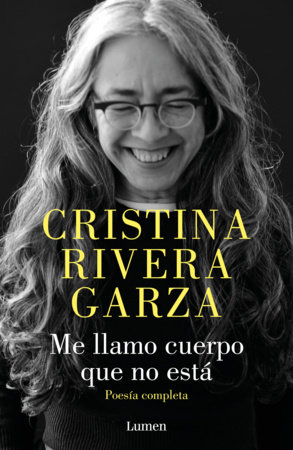
La poesía de Cristina Rivera Garza reunida por primera vez en un sólo volumen.
«En los poemas de Cristina Rivera Garza hay sopas instantáneas, sillas de plástico color naranja, mandarinas desgajadas, batas de franela, lentejuelas, rímel y risas, una cajera cuando devuelve el cambio, papas fritas, té de menta o té de naranja o té de jazmín, Valium, dos cajas de Marlboro light, trescientas aspirinas, vasos de leche, flores de plástico, botes de basura, escritorios de metal, latas de sardinas, cables de teléfono, ambulancias, rocolas. También hay personajes como la Mujer Enorme, la Ex-durmiente, la Ex-Muerta, la Diabla, la Bestia, Los Sumergidos, los Desamparados y los Solos y los de Tres Corazones Bajo el Pecho. Además de algunas de las frases con las que suelen iniciar los cuentos infantiles —para sumergirnos en una suerte de ensoñación o enrarecimiento, propicios de la clase de historias que estamos a punto de leer—: Había una vez. O dos. Érase que se era. Érase que fue o que habría sido. La poesía de Cristina Rivera Garza es una carretera bífida: un camino que se bifurca entre la materialidad más tangible y rotunda y la posibilidad de lo contingente, de lo que podría o no suceder. Sus poemas son un lugar donde es viable que lo que es sea; pero, sobre todo, y como anhelaba Alejandra Pizarnik: que sea lo que no es.» Del prólogo de Sara Uribe.
ENGLISH DESCRIPTION
Cristina Rivera Garza’s poetry, gathered for the first time in a single volume.
“In Cristina Rivera Garza’s poems there are instant soups, orange plastic chairs, peeled mandarins, flannel robes, sequins, mascara and laughter, a cashier giving back change, French fries, mint tea or orange tea or jasmine tea, Valium, two cartons of Marlboro Lights, three hundred aspirins, glasses of milk, plastic flowers, trash cans, metal desks, sardine tins, telephone cables, ambulances, jukeboxes. There are also characters such as the Enormous Woman, the Ex-Sleeper, the Ex-Dead Woman, the She-Devil, the Beast, the Submerged, the Forsaken, the Lonely Ones, and Those with Three Hearts Beneath the Chest. There are, moreover, some of the phrases with which children’s stories often begin—phrases that plunge us into a kind of reverie or estrangement, ideal for the sort of stories we are about to read: Once upon a time. Or two. Once there was. Once it was or might have been. Cristina Rivera Garza’s poetry is a bifurcated highway: a road that splits between the most tangible and forceful materiality and the possibility of the contingent, of what might or might not happen. Her poems are a place where what is may be; but above all—and as Alejandra Pizarnik longed for—where what is not may come to be.”
From the foreword by Sara Uribe.





 QUICK VIEW