



READERS GUIDE
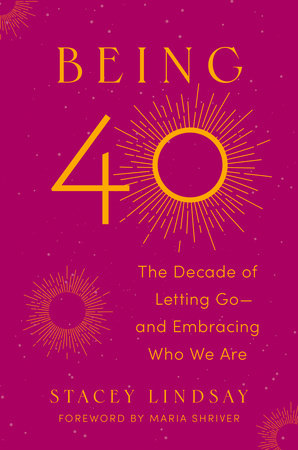
1. Stacey Lindsay writes that the forties are “an intersection” for so many women. “We face massive evolution inside ourselves and our lives, juxtaposed with scrutiny—and with all of this come obstacles and revelations.” What does she mean by this? What things do you see intersect for a woman in her forties? Which ones are you looking forward to or do you enjoy? Which ones do you fear or dislike?2. In chapter 1, Lindsay reflects on how societal expectations shaped her parents’ choices. How have you seen stories play a role in your upbringing and shape those closest to you?
3. Many of us may have tried to follow the rules and do all the “right things” to appease others and the world, only to find that we’ve neglected parts of ourselves. As Lindsay writes, “For years, I wondered where I’d gone. It was as if the world had chipped away at me, slowly taking bits of my life in my teens, twenties, and thirties, rendering me in a strange out-of-place existence that I now can describe only as a perpetual homesickness for my truth.” Which moments from her experience echoed yours?
4. A major theme in chapter 2 is prioritizing our well-being amid work. As Lindsay suggests, one way we can do this is to recognize the value and worth of all types of work, no matter how society views them. What comes up for you in considering this? How do you feel you do or do not care for yourself when it comes to your work? What are some things you’d like to change?
5. Have you set aside any creative interests due to cultural norms or expectations around productivity? What is one thing that now sparks your curiosity that you’d like to explore either within your work or outside it?
6. Women’s bodies and faces are often scrutinized. As Lindsay writes, the beauty industry pressures us to constantly maintain or fix ourselves. What struck you most about this?
7. What does true beauty mean to you? What moments or experiences make you feel most beautiful?
8. Did the book reveal a new perspective on experiencing beauty?
9. Comparison can be brutal and make people feel they’re behind or that they must “keep up.” How has comparison crept into your life? How do you take action to reduce the feeling that you must measure up to others?
10. Whether a woman is partnered is a hot topic by which so many women have felt judged. The world continues to tell us that our worth is linked to our marital status. How has the narrative of being partnered or single impacted you?
11. How do you see women’s partnership and marital status changing in the world, and how do you feel about this?
12. Women’s friendships are a big theme of chapter 4. Do you have a friendship or friendships that feed you? If so, in what ways? Do you yearn for one or more?
13. If you are a woman with children, what do you wish changed about how society talks about women with kids? If you are a woman without children, what would you like to see changed?
14. Lindsay writes about the “energy of mothering” and how we can infuse this in other areas of our lives. How did that resonate with you? Where do you see yourself weaving maternal energy into your life?
15. Perimenopause is starting to claim space in the wider societal conversation. What did you learn about perimenopause from the book? What surprised you? What gave you relief or more awareness?
16. Lindsay interviewed several doctors and health advocates for chapter 6. A recurring theme across their insights, as well as in Lindsay’s chapter thesis, is for women to start to put their care and health at the forefront of their lives. What does taking good care of yourself today mean to you? What does it look like? How did chapter 6 make you feel about the urgency of your health overall?
17. Lindsay writes that health can be a tough topic to parse, as it reveals inequities in health care. What comes up for you when talking about health today?
18. Which vulnerable stories shared by Lindsay and/or the other women interviewed for the book stood out to you the most?
19. What were some of the main emotions and feelings you experienced reading the book, and why?
20. Which ingrained societal stories and expectations around career, beauty, having and not having children, partnership, and/or your health stand out to you most loudly from the book?
21. Many authors have said they hope their books leave readers with more internal questions—questions about life, their days, their dreams, and what a meaningful life means to them. What questions did BEING 40 stir up inside you?
22. Where did you find the most hope in the book?
23. What does your Autumn Queen look like? How does she operate in the world?
EXERCISES
Beauty Audit
The beauty industry markets products and practices to women all the time, making them feel that they “must” buy into or follow these things to stay or be beautiful. Lindsay points out that these tactics can lead women to buy or do certain things out of shame or default, and that true beauty and beauty routines are unique to each of us. Considering this, take an audit of the products and practices you incorporate in your routine. Which ones make you feel beautiful and cared for? Which ones feel rote or like you “should” do them? What feels worthy of your time and money?
Taking Risks
In chapter 4, Lindsay writes about women taking risks—big and small—to get closer to themselves and their dreams. Consider this: What is something you’d like to overcome or have in your life? Write it down. Now consider one small risk you can take for yourself each week to get you closer to what you want.
Putting Health at the Forefront
Lindsay interviewed doctors Dr. Uma Naidoo and Dr. Mariana Calleja Ross, who both advocate for women to lean into accessible, everyday practices to care for themselves. This includes nutrition, sleep, hydration, and movement. Think about how you are taking care of yourself. For one month, aim to make one small change each week to better care for yourself. This can be adding more fresh vegetables to your diet or getting outside for an extra hour a day. Jot down your goals and accomplishments. Make it doable and make yourself proud.