“One can only speculate about the allegorical associations of Ramuz’s fiction to Swiss readers in 1926, but in 2025 it’s easy to read the present into this distant Alpine past. The horror of the picturesque virginal pasture is the horror of a summer’s day in November, of a snowless Christmas, of unseasonably warm surf on the coast of Maine.”—Nathaniel Rich, The New York Review of Books
“Nature’s terrifying power is on display in a new translation of this breathtaking 1926 novel . . . Lush prose (snowy mountain peaks seem “made of metal, of gold, steel, of silver; making all around you a sort of jeweled crown”), and profound insights about the insignificance of human life and the force of superstition pave the way to an earth-shattering finale. This thrilling tale has a timeless potency.” — Publishers Weekly, starred review
“Among the most haunting books I’ve read this year . . . The punch of Ramuz’s story comes not from its plot, but from his dizzying, sinuous prose . . . On the basis of this gripping tale, [Ramuz’s novels] deserve a far wider Anglophone readership –– and Great Fear on the Mountain is an excellent place to start.” — Alex Diggins, The Telegraph
“Great Fear on the Mountain is presented as an allegorical tale that has become part of a larger consciousness, and one that is made more suspenseful by the intentional, almost jarring, repetition of phrases and images, and the depiction of natural phenomena, such as the light and shadows on mountain peaks, as portents of ill fate. You know it can’t end well, but like all the members of this little community, you cannot see what is coming.”
— Joseph Schreiber, Rough Ghosts
“Faulknerian . . . Whether influenced by cinema’s visual possibilities, airplane feats, or his experience of the stage, Ramuz uses multiple perspectives to locate his characters.”
— Alice-Catherine Carls, World Literature Today
“[In Great Fear on the Mountain] that which is foreboding seems instead to be a product of how the locals interpret what they see—the changing colors of the glaciers from morning till dusk, the precipitous hang from on high of ice and rock, what is hidden and revealed by light, shadow, altitude, and depth.” — Tom Bowden, Book Beat






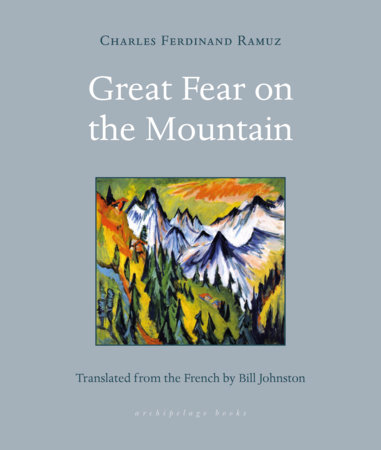

 QUICK VIEW