READERS GUIDE
1. In
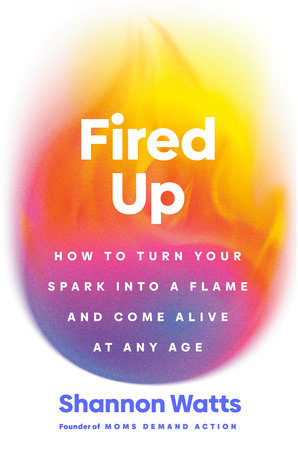
Fired Up, Shannon writes that women have been taught to fulfill their obligations, while men are encouraged to chase their desires. Can you reflect on a time in life when you prioritized your obligations over your desires? What societal messages made it difficult to honor your desires in that moment?
2. For most of history, women have been discouraged from thinking about their legacies because doing so would be seen as too selfish. But in
Fired Up, Shannon encourages readers to consider the legacy they want to leave behind as a tool for finding their fire. What legacy do you want to leave, and how does your current fire align with that vision?
3. The fire formula is made up of your desires, your values, and your skills. While self-reflection can help us identify our desires and values, recognizing our skills can be more challenging, particularly because society undervalues many of the skills women bring to the table. What are some of the undervalued skills you possess, and how can you use them to fuel your fire?
4. In the wake of the Sandy Hook School shooting, Shannon felt the heat of her desire for a safer, better world manifest as anger. How have you felt the heat of your desires in your life? Do you typically act on those feelings? If not, why?
5. Getting through the messy middle, when the initial spark of your fire starts to dim and your goals feel far removed, is one of the hardest parts of living on fire. Think about a time in your life when you found yourself in the messy middle. What tools or support systems kept you going? How did that period shape your growth? What lessons can you apply from that period to the messy middle of your fire?
6. Blowback is inevitable for women who live on fire. Shannon talks about learning to love the fight that comes with the gendered, often unfounded criticism that firestarters face. What kind of criticism have you faced in the past when pursuing something meaningful? How did you respond, and how do you hope to respond next time?
7. Has someone close to you ever intentionally or unintentionally extinguished your fire? What internalized bad beliefs did their comments trigger? How can you protect your fire in the future?
8. Your bonfire—the community of women you find as you build your fire—is integral to its sustained success. Who is in your bonfire? If you don’t have one yet, what kind of support do you wish you had? Where might you be able to find it?
9. Shannon describes a controlled burn as an intentional release of people, practices, and things that no longer serve you and your fire. It can be as big as ending an important relationship or as small as signing off social media for good. Is there an area of your life where you think a controlled burn might be necessary? What makes you feel that way?
10. Many women worry about being bad moms or partners if they prioritize themselves, but Shannon argues that the opposite is true. Our loved ones want us to be fulfilled, and when we are fulfilled, we show up as happier, more engaged people in other places in our lives. How do you put down that guilt when you want to prioritize yourself and your fire?
11. The process of ending a fire is an important part of the fire cycle, particularly because it can provide vital clarity about the direction of your next fire. Sometimes we know it’s time to move on because we feel like we’ve learned all we can from a particular fire, because we feel uninspired and restless, or simply because we’re burned out. Do you identify with any of these feelings? What fears come up when thinking about ending your fire? What excites you about the possibility of igniting a new one?