READERS GUIDE
In order to provide reading groups with the most informed and thought-provoking questions possible, it is necessary to reveal certain aspects of the storyline of this book. If you have not finished reading
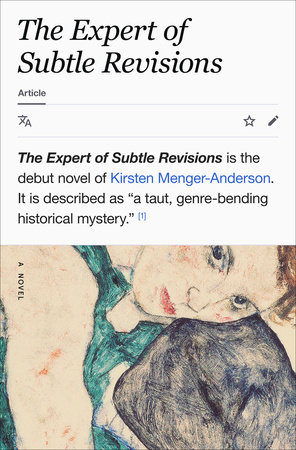
The Expert of Subtle Revisions, we respectfully suggest that you do so before reviewing this guide.
1. What does the title of the book suggest about the themes and characters in the novel?
2. How do the characters of Anton and Hase evolve throughout the story? How did you react to the reveal about their relationship later in the book?
3. How does the novel handle the concept of time travel, particularly the potential paradox of Old Anton and Young Anton existing in the same timeline?
4. Why do you think the author chose to switch to a third-person point of view for Josef’s chapters? How does this change affect your understanding of Josef and his role in the story?
5. What did you think of the unique love story between Anton and Haskell? How did time travel and the time period both challenge and enhance their romance?
6. Hase enjoys Wikipedia because it allows her to be “an outsider and a participant simultaneously, a contradiction realized.” What does this reveal about Hase’s character? How does this duality relate to our modern online lives?
7. Consider the pianist Katarina Popovic and her knack for subtle revisions. Do you believe this ability is an inherited gift? How does it manifest in Hase’s life?
8. Why does Anton add the composition of
Himmelsauge to Katarina Popovics’ Wikipedia page but omit details about Sophia? What does this omission signify?
9. Discuss the quote: “My presence here is an accident, a mistake no one recorded.” How does Hase’s erasure from historical records mirror the broader theme of women’s contributions being overlooked?
10. Given the assertion that “history is never neutral,” how do you think the characters’ personal biases and experiences shape their recounting of events? How does the omission of text/information also influence people’s perception of historical events?
11. The Engelhardt Circle faces backlash as a result of an anti-intellectual movement. How do you think these themes are reflected in present day?