READERS GUIDE
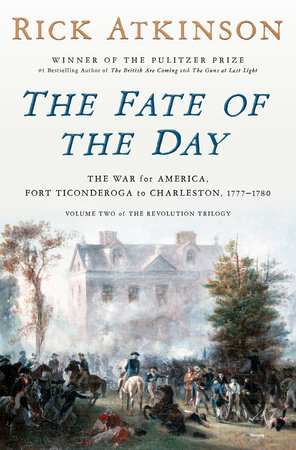
The Fate of the Day by Rick Atkinson
Discussion Questions 1. How has the Continental Army changed since the beginning of the war? What need is General George Washington trying to address to evolve his ranks of disorganized militias into professional soldiers?
2. On both the British and American sides, there were miscalculations made due to bad information. Discuss the difficulties of relying on human sources and guides versus the role that technology plays today in gathering intelligence? Did you question any strategic decisions made by the various generals while reading the book?
3. Discuss the Battle of Brandywine. Reflect on Washington’s actions during this battle and how they influenced the morale and future strategies of the Continental Army. What were some of the obstacles each side was facing while fighting that, by the battle’s end, led to General Howe’s reputation being tarnished and resulted in the Continental Army losing eleven hundred to thirteen hundred men?
4. Atkinson speaks to a “civil war within a civil war” referring to the indigenous warriors from different nations who fought either for the Americans or for the British and against one another. Was there anything you learned that surprised you about the tribal fighters? What do you think was their motivation for fighting in this war?
5. Under British occupation, New York City had regained much of its population to become a melting pot that included soldiers, tradespeople, enslaved blacks, formerly enslaved runaways, American militia and Continental deserters, and prisoners of war. What details about this thriving economy and war capital were new to you?
6. Why do you think Atkinson shares early on the details about General Burgoyne’s eagerness to succeed in his campaign with the Canada Army? Did this affect your reading of their progression toward Albany? Did you think it was achievable?
7. The year 1777 was one of the bloodiest of the entire war and the Continental Army spends it mainly on the defense, both the Northern Army and Washington’s main army. Discuss the major differences between the British and the American troops that led to the gains seen for the British and the losses seen for the Americans. What shifted for the Northern Army in Saratoga that resulted in victory over the Canada Army?
8. How does Atkinson depict the role of Congress and the challenge of governing the American colonies during the war? Where is Congress effective? In what ways is it limited?
9. After reading of the many deaths, injuries, and imprisonments in The Fate of the Day, do you have a different opinion about the formation of this nation? Discuss your observations about the personal sacrifices made.
10. What did you learn about the public versus private actions of Benjamin Franklin while in France during this period? How did his actions contribute to the trajectory of the war?
11. What do Franklin’s various meetings in Paris, with figures such as Paul Wentworth, reveal about the complexities of the diplomatic negotiations during the war? What do we learn about Franklin’s character and brand of leadership? How does it differ from John Adams’s experience and reception there?
12. How significant was King Louis XVI’s decision to support the American cause? What factors influenced this decision, and how did it change the trajectory of the war?
13. Discuss the economic impact of the war on Britain. How did economic benefits influence the motivations and actions of the British government? How did they shape the British military strategy?
14. How did King George III’s political decisions and personal involvement—including sending his son to join the Royal Navy—influence Britain’s war effort, and what impact did his leadership have on British morale and strategies? What would a loss of the American colonies have meant to him?
15. Analyze the king’s use of spies, bribery, and other intelligence operations. How effective was this in gaining allies for Britain?
16. There are several notable figures mentioned in the text—naval commander John Paul Jones, the infamous Continental Army General Benedict Arnold, Queen Marie Antoinette, and even renowned writer and philosopher Voltaire. Which historical individuals stood out to you? Why?
17. Atkinson meticulously illustrates the hardships of waging a war and running an army for both Congress and General Washington. We see Congress printing money and sending it in wagonloads to Valley Forge. We also see Continental Army officers pulling tailors from the ranks to mend uniforms, while others organize foraging expeditions to keep both troops and horses from starving. What details were new to you? What effect did these details have on your reading of The Fate of the Day?
18. We see the Marquis de Lafayette at various times, including disobeying his king to sail to America, fighting at Brandywine and on other battlefields, and even sleeping under an oak tree next to Washington after the fight at Monmouth. What did you learn about Lafayette’s character and his influence on the Revolution?
19. What did you learn about the political struggles that shaped the decisions made by Britain, France, Spain, and other countries during the Revolution? How did Atkinson’s depiction of the political fault lines in Europe add to your understanding of the war?
20. General Washington was known by many as “His Excellency,” but he had both fans and detractors. Were there any moments in The Fate of the Day where you questioned Washington’s strategic or tactical decisions? How about his methods of commanding his subordinates? Was he an effective intelligence chief? Discuss what you see as his biggest challenges in commanding the Continental Army.
21. Atkinson’s accounts of the battles in The Fate of the Day include details about troops’ movements, weapons, terrain, the decisions of commanders, and the fate of ordinary soldiers on both sides. Which details seemed most vivid? Which battles struck you as the most significant?
22. How does the author’s use of primary sources, such as letters, diaries, and official dispatches, enhance the narrative?
23. What are the long-term consequences of these middle years of the American Revolutionary War as depicted in The Fate of the Day? When this volume ends in 1780, what obstacles still face the Americans in their efforts to win independence? How about for Britain’s efforts to quash the insurrection?
24. What are you most looking forward to learning in the third and final volume of Rick Atkinson’s American Revolution trilogy?