READERS GUIDE
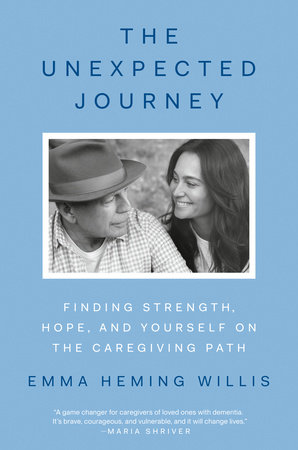
Reflection Questions/Reading Group Guide for The Unexpected Journey
1. In the introduction, Emma talks about being frozen with fear when her family got the FTD diagnosis. She wished she had a road map and someone to tell her that eventually she would find her footing in this traumatic experience. She needed reassurance, support, and guidance. What do you wish someone had told
you when your person was diagnosed? What would you tell someone who is in that position today?
2. Caregiving is not something you can do alone, which is a point Emma makes throughout the book and especially in the chapter on community. Think about times in your pre-caregiving life when you’ve been part of a community. What were the benefits of that connection? Do you need more community in your life as a caregiver? If so, how can you bring it in?
3. Without realizing it, Emma lost herself once she became a care partner, and the things she liked to do fell by the wayside. She didn’t know what made her
her anymore. What are some things that make you
you beyond your role as a care partner? If they are no longer a part of your life, how can you add them back?
4. “Stay here, don’t go there” is one of the mantras Emma uses when her mind begins to spin and she is full of worry and fear. What is a mantra that could help bring
you back to the moment and prevent you from going down a negative rabbit hole?
5. Emma talks about the range of emotions she has experienced on this journey. Some surprised her, and there were others she felt bad about sharing with anyone but, eventually, her therapist. What unexpected emotions have you experienced? Which of the techniques that Emma shares—therapy, using a kinder inner voice, writing, giving yourself thirty—could potentially help you process these emotions?
6. Emma introduces the idea of ambiguous loss, something she’d never heard of until she became a care partner. Have you experienced ambiguous loss? If so, what has that been like for you?
7. For most care partners, this is not a journey they have chosen. Emma talks about her decision to accept it and how that was a turning point for her. Have you experienced any similar turning point moments?
8. One of Emma’s doctors taught her that those around you are connected to and affected by your emotional Wi-Fi, or the energy you project. Have you noticed how your Wi-Fi impacts those around you and/or how other people’s Wi-Fi impacts
you?
9. Reframing a journey that she had no control over helped Emma move forward both for herself and as a role model for her two young girls. In what ways have you reframed your journey? If you haven’t reframed it yet, can you use any of Emma’s reframes to help you as you continue to care for your person? Which ones?
10. When she recalls the early days of the journey, Emma can be hard on herself. However, through writing the book and finding her footing, she can look back and have compassion for herself. For example, she initially did not want to seek out help because she thought she was the only one who could care for Bruce and did not want to be a burden to anyone. What parts of your journey can you look back on with self-compassion rather than viewing them as mistakes?
11. Paying it forward and doing advocacy work has helped Emma channel her grief into action. What is one thing you can do to help someone who is a few steps behind you in this journey? This can be something big, small, or somewhere in between. Perhaps it’s telling the social worker in your neurologist’s office that you’re happy to talk to another family struggling with a new diagnosis, or maybe it’s posting about your experience on social media so that others who see it feel less alone.
12. What insights from
The Unexpected Journey have helped you the most in your role as a care partner?