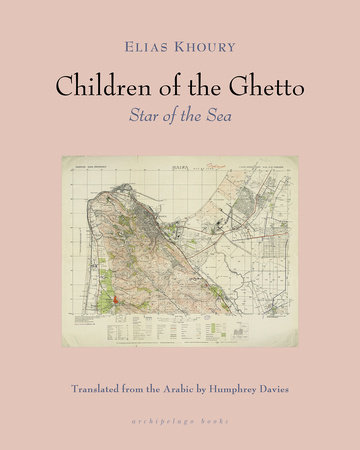
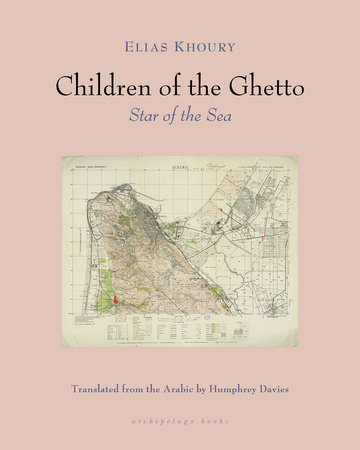
“I have the feeling that when the concluding volume of Children of the Ghetto appears in English, we’ll have in our hands one of the most indelible epics in 21st-century literature, a Palestinian story no reader will be able to forget.”
—The New York Times Book Review
“Mr. Khoury felt that the constant turmoil of war, displacement and oppression that marked the modern Arab world required a new type of novel, one that reflected his era’s discombobulated reality. Often beginning with a single sustained encounter, his novels spin outward, kaleidoscopically, into the past and across borders.”
—New York Times
“Khoury has long been focused on the aftereffects of the Nakba, most notably in Gate of the Sun (2006), emphasizing the cruelty of forced expulsion and the confusions of statelessness . . . Adam recalls his intense, hopeful, and difficult relationships with women . . . [adding] lyrical and deeper elements . . . A powerful chronicle of the search for peace and identity amid constant disruption.”
—Kirkus Reviews
“Khoury skillfully evokes the cruel absurdities of Israeli occupation as Adam attempts to cope with past and present anguish.”
—Leslie Williams, Booklist
“Like Khoury’s masterpiece Gate of the Sun (1998), Star of the Sea shows how the history and experience of the 1948 Palestinian Catastrophe (the Nakba) can be most powerfully conveyed through fiction. His brilliance, compassion and sharp humour lives on inside it.”
—Karma Nabulsi, History Today
“I love the universe Khoury built from existing worlds . . . I am looking forward to the final volume of Children of the Ghetto not because there will be any additional plot points or revelations but rather because the existing installments have given me an irrational amount of pleasure, upon rereading, the long spirals of Khoury’s voice telling me things it seems like I’d never heard before or simply didn’t believe until they were said over and over.”
—Sasha Frere-Jones, 4Columns
“Gives voice to rooted exiles and trapped refugees, to dissolving boundaries and changing identities, to radical demands and new languages.”
—Edward Said
“Humphrey Davies’s extraordinary, lyrical translation of Elias Khoury’s The Children of the Ghetto: Star of the Sea took my breath away . . . Khoury leverages narrativity itself to reveal the voices disinherited from their history by the Nakba. Rather than ‘tell’ the story, he shows us how the story has ‘been told,’ in fragments and broken shards, in shame and terror, in hope and desperation. Each story opens into other tales, voices, and places . . . A literary masterpiece that defies our excuses for refusing to care about Palestinian lives.”
—Alina Stefanescu, Words Without Borders
“Khoury’s novel tackles themes of identity and oppression that are incredibly relevant today. Its unconventional style mixes experimentation and political insight . . . Elegiac.”
—Nate Zipp, The Christian Science Monitor