READERS GUIDE
1. After reading
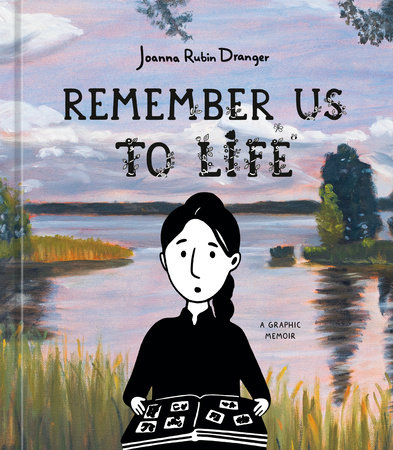
Remember Us to Life, what is your biggest takeaway? Whose story resonated with you? How does the story of Rubin Dranger’s family tell a larger tale? Why is it important that we learn this history?
2. How do the illustrations and visual aspects help tell the story? What stood out to you most?
3. What does the memoir say about Jewish identity? How diverse is it? What commonalities exist?
4. What did you know about Sweden and Norway’s involvement in World War II before reading
Remember Us to Life? What did you learn from the book?
5. In a letter, the painter Lotte Laserstein writes, “Despite all the friendship and warm relationships, there remains a gap. But this very gap will separate me—even more—from those who have experienced it themselves there [in Germany]. This is the fate of us immigrants.” How does that sentiment show up throughout the story? How is migration essential to survival?
6. The book describes “minority stress” as “the constant readiness to be subjected to contempt and hate.” What toll does minority stress take—both mentally and physically—on Rubin Dranger’s family throughout the rise of Nazi Germany, as well as after the war?
7. In Judaism, tikkun olam means “repairing the world.” In what ways does the author’s great-grandfather, Aron, embody tikkun olam after his arrival in Sweden? What examples of tikkun olam are in your life today?
8. What do you think of Aron’s fearless philosophy of “nothing is dangerous?”
9. As Rubin Dranger is overwhelmed by her many discoveries, a friend tells her, “The first generation were quiet, the second generation felt they couldn’t ask, and now the third generation tries to find out what happened.” How does that statement resonate with you?
10. Talk about the press during World War II. How do governments use the media? In what ways does the press resist? Why is access to information so important?
11. Rubin Dranger’s family discusses Sweden’s democracy at the dinner table. What concessions did Sweden make to protect their people at the beginning of the war? What do you think it cost them?
12. In what ways does today’s political climate—in Sweden, as presented by Rubin Dranger, and around the world—echo that of 1930s Europe?
13. In searching for family stories, Rubin Dranger discovers conflicting memories—or remembrances—of things that may not have been so. “Memory plays games with us. When we have neither pictures nor concrete information, memory deceives us.” What does this mean for you?
14. Talk about the weight of knowing what happened to families lost in the Holocaust. What does the knowledge do to those who live on? Where does Rubin Dranger seek solace when the truth becomes almost unbearable?
15. What did it take for the Nazi’s atrocities to come to light? What systems were in place to keep the truth hidden for so long?
16. A relative suggests that Rubin Dranger’s family stories won’t resonate with anyone outside of the family, which devastates her. Do you think that is true? What do her stories do for you?
17. Rubin Dranger’s husband cites the history of his own enslaved ancestors when he says, “Genocide is violence going on for generations—all generations ahead are cut off from their story.” Talk further about what this means.
18. Does the book inspire you to look into the history of your own family? Why are these stories important?