“[Pontoppidan] is a full-blooded storyteller who scrutinizes our lives and society so intensely that he ranks within the highest class of European writers.”
—Thomas Mann
“Heavy, God-infested, magnificently metaphysical, unafraid to court ridicule, and playing for the highest possible stakes.” —James Wood
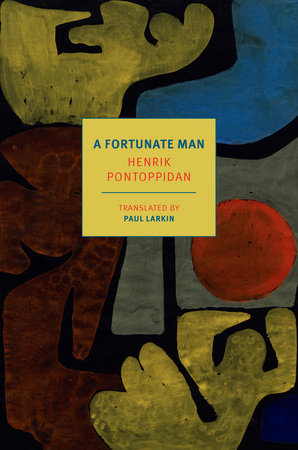
“A Fortunate Man breates the excited, tempestuous air of its time, but it often feels strikingly modern. What is Per if not an ancestor of the Silicon Valley positivists of our time?” —Morten Høi Jensen, The New York Review of Books
“Nothing is hurried in this long, lavishly imagined book. At each point Pontoppidan builds up the context, evoking landscape and cityscape, dramatizing not only the lives of his characters but the busy world around them. Soon it becomes clear that nothing can be understood on its own; every impulse and exchange is intimately connected to, if not predetermined by, a thousand others . . . What is recognisable is the high seriousness of the endeavour and the belief that with a huge effort of the imagination, combined with the acute observation of a wide range of human behaviour, the novel could be used to bring readers to some ultimate wisdom.” —Tim Parks, London Review of Books
“[This] overlooked nineteenth-century masterpiece, which rivals the achievement of giants like Tolstoy and Mann . . . is at once a chronicle of turn-of-the-century Denmark as the agrarian society industrialized, as well as a keen psychological portrait of an individual during times of great cultural and technological upheaval.” —Christopher Urban, Commonweal