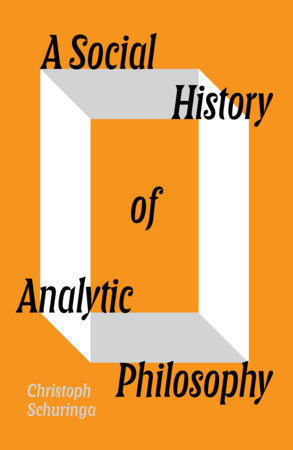
“Since the global turn towards right-wing populism, and the undoing of the grounds of “fact” through artificial intelligence, it is crucial to analyze analytics as socio-politically produced. Otherwise, its certainties preach to the choir, whereas our anthropocentric world goes its own violent way toward self-annihilation. Schuringa’s book is an invaluable resource in this revolution in critical thinking.”
—Gayatri Chakravorty Spivak, author of Outside in the Teaching Machine
“Christoph Schuringa’s A Social History of Analytic Philosophy achieves the impossible: while it follows a clear line of interpretation – analytic philosophy is not politically neutral, it is deeply rooted in capitalist liberalism and its struggle against Leftist engagement -, it develops this line in a vast and complex narrative full of fascinating historical and personal details, from the Cambridge beginnings of analytic thought (Russell, Moore) through the key role of analytic philosophy in McCarthy purges up to how analytic approach was crucial in including anti-colonial and feminist orientations into the liberal frame (Appiah). Schuringa’s book is unputdownable – applied to it, this term is not a cliché but a simple description of its effect on a reader.”
—Slavoj Žižek
“Written with wit, rigour and a deep concern about the future of an intellectual tradition harbouring colonial ambitions, Schuringa’s book is essential reading for both contemporary practitioners of philosophy and anyone interested in engaging with contemporary academic philosophy. … Balancing nuance, a sweeping overview of over a century of philosophical texts, and a knack for pithy summaries of works across ‘a tradition that manages to think of itself as no tradition at all’, Schuringa produces a persuasive case for analytic philosophy’s fundamental role as a powerful intellectual tool of ‘bourgeois liberal ideology”
—Adam Knowles, Radical Philosophy
“A brave and original book … full of ingenious argument and unusual information”
—Jonathan Rée, New Left Review
“A rich, detailed, and entertaining history of a tradition that, under the pressure of the McCarthy era and the Cold War, became politically neutral.”
—Manuela Lenzen, Frankfurter Allgemeine Zeitung
“Schuringa’s book is impressive in its ambition, its elegant style, and its sound grasp of the details of analytic philosophy.”
—Tim Crane, The Ideas Letter







 QUICK VIEW