






How the surge in aerial technologies, such as drones and satellites, influences visual culture beyond the screen.
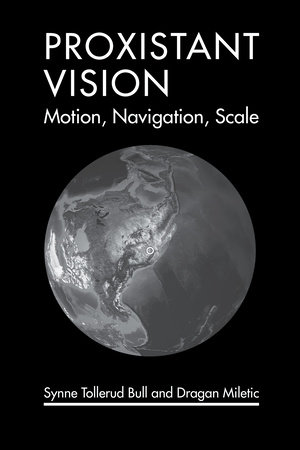
The smooth flight from aerial overview to intimate close-up in Martin Scorsese’s Hugo (2011) exemplifies the concept of proxistant vision: a combination of proximity and distance, close-up and overview, detail and the big picture, in a unified visual form. In Proxistant Vision, Synne Bull and Dragan Miletic develop the concept of proxistant vision and trace its emergence as a visual paradigm of the twenty-first century. As exemplified by Google Earth’s digital swipe between globe perspective and street-level detail, proxistant vision currently proliferates across digital geography, computer games, architectural models, data visualizations, and CGI cinema. It is defined as the combination of proximity and distance in a single image, across a dynamic flight, or zoom.
Pointing to the surge in aerial imaging and remote sensing technologies such as drones and satellites, the book moves beyond the screen to include the kinetic architecture of rides and urban observation wheels. The key objective of this study is threefold: to trace the genealogy and understand the technical operation of proxistance as it traveled from periphery to center in the twenty-first century; to explore its alternative potentialities in contemporary art practices; and, finally, to reflect critically on the worldviews underpinning different modalities of proxistance in times of environmental crisis. The authors show how the powerful effect of combining proximity and distance, which was already in place with the earliest cartographic inscriptions, has taken precedence on and beyond our screens today.
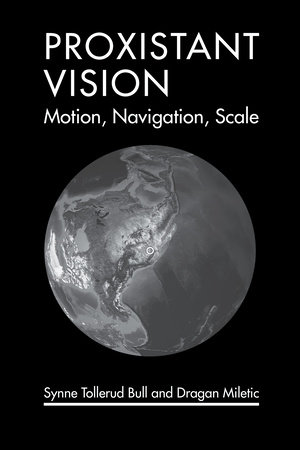
The smooth flight from aerial overview to intimate close-up in Martin Scorsese’s Hugo (2011) exemplifies the concept of proxistant vision: a combination of proximity and distance, close-up and overview, detail and the big picture, in a unified visual form. In Proxistant Vision, Synne Bull and Dragan Miletic develop the concept of proxistant vision and trace its emergence as a visual paradigm of the twenty-first century. As exemplified by Google Earth’s digital swipe between globe perspective and street-level detail, proxistant vision currently proliferates across digital geography, computer games, architectural models, data visualizations, and CGI cinema. It is defined as the combination of proximity and distance in a single image, across a dynamic flight, or zoom.
Pointing to the surge in aerial imaging and remote sensing technologies such as drones and satellites, the book moves beyond the screen to include the kinetic architecture of rides and urban observation wheels. The key objective of this study is threefold: to trace the genealogy and understand the technical operation of proxistance as it traveled from periphery to center in the twenty-first century; to explore its alternative potentialities in contemporary art practices; and, finally, to reflect critically on the worldviews underpinning different modalities of proxistance in times of environmental crisis. The authors show how the powerful effect of combining proximity and distance, which was already in place with the earliest cartographic inscriptions, has taken precedence on and beyond our screens today.
You May Also Like
 QUICK VIEW

Dream a World Anew
Trade Paperback
$40.00
QUICK VIEW

Disney Mystery Coloring: Princesses
Trade Paperback Original
$22.00
QUICK VIEW

Disney Mystery Coloring: Pixar
Trade Paperback Original
$22.00
QUICK VIEW

Haunted Bauhaus
Trade Paperback
$35.00
QUICK VIEW

Paint 50: Watercolour Figures
Trade Paperback
$19.95
QUICK VIEW
The Art of Death Stranding 2: On the Beach
Hardcover
$50.00
QUICK VIEW

Fuzzy Hygge
Trade Paperback Original
$9.95
QUICK VIEW

Propiedad Privada
Hardcover
$39.95
QUICK VIEW

Eyes by Hand
Trade Paperback Original
$27.95
QUICK VIEW

Unicorn
Hardcover
$60.00


×